Tree Risk Assessments: Warning Signs of a Potentially Hazardous Tree
Tree Risk Assessments: Warning Signs of a Potentially Hazardous Tree
A tree does not have to be completely dead to create a potential safety concern.
Cracks, dead branches, decay, damaged roots, storm damage, weak branch attachments, and changes around the root system can all be reasons to look more closely. However, seeing one warning sign does not automatically mean a tree will fall or needs to be removed.
In professional arboriculture, a tree risk assessment is a structured process for evaluating tree defects, the likelihood and consequences of failure, and the people or property that could be affected. Homeowners can watch for visible warning signs, but a basic visual check is not the same as a formal professional assessment.
For Utah County homeowners, knowing what to watch for can help you recognize when a tree may need professional evaluation.
What Is a Tree Risk Assessment?
A tree risk assessment examines the tree, its surroundings, possible defects, and the people or property that could be affected if part or all of the tree fails.
A professional assessment may consider:
- The trunk, branches, and roots
- Structural defects
- Decay or cavities
- Previous storm damage
- Root and soil conditions
- Nearby buildings, vehicles, sidewalks, and people
- How frequently nearby areas are occupied
- Site and weather conditions
- The potential consequences of tree or branch failure
Homeowners can identify visible concerns, but interpreting how serious those conditions are often requires professional knowledge.
What Warning Signs Can Indicate Tree Risk?
No single symptom proves that a tree will fail. Several conditions, however, deserve closer attention.
Large Dead or Hanging Branches
Dead branches are among the most noticeable potential tree hazards.
A large dead limb above a driveway, sidewalk, roof, patio, or other frequently used area may warrant professional evaluation. Branches that are partially detached or hanging in the canopy also deserve attention.
The size of the branch and what could be affected if it falls are both important considerations.
Cracks or Splits in the Trunk or Major Branches
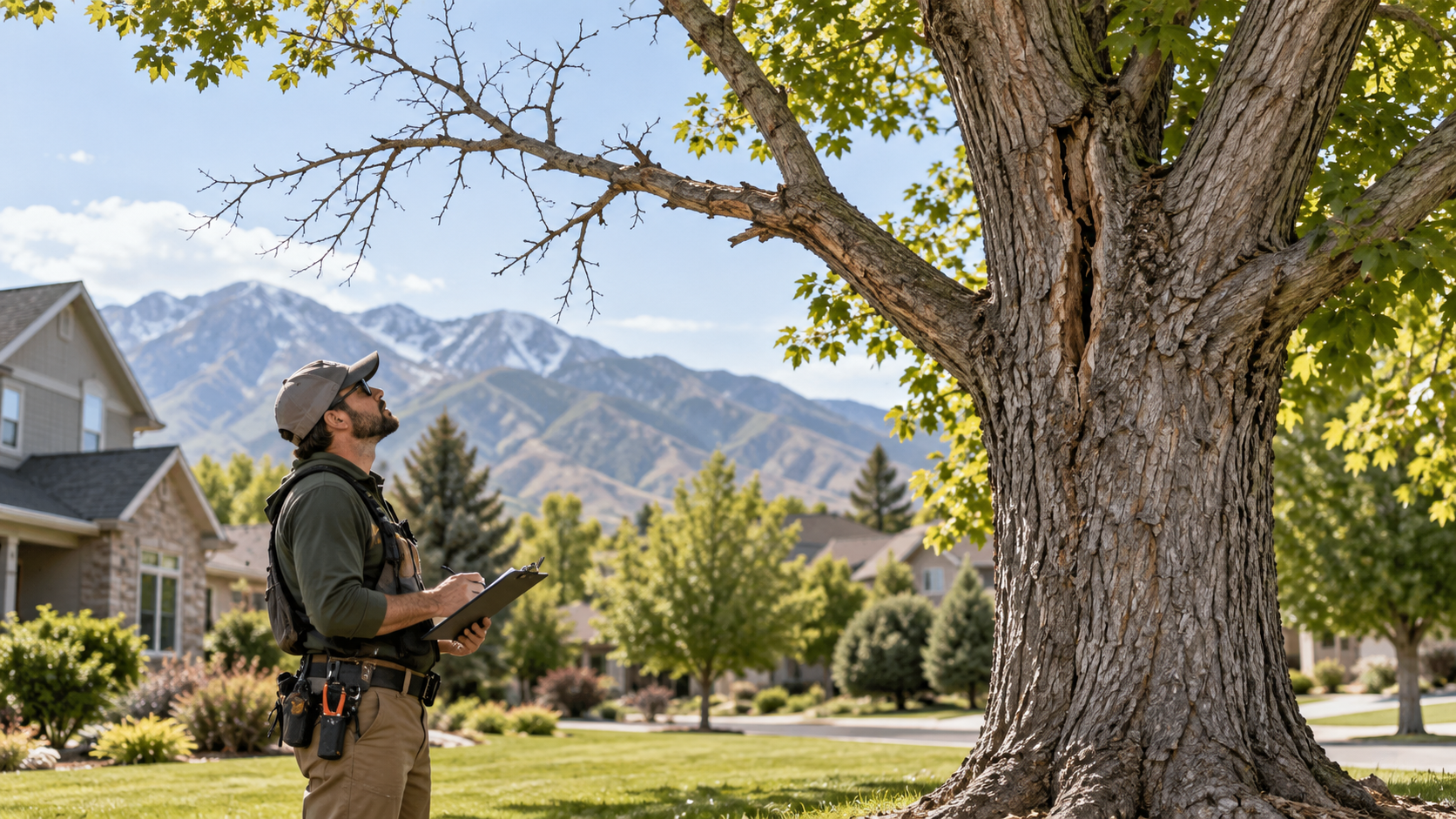
Visible cracks can indicate structural weakness.
Pay attention to cracks or splits in:
- The main trunk
- Large limbs
- Major branch unions
- Areas where two large stems meet
The size, depth, location, and surrounding condition of a crack can affect how concerning it is.
Cavities, Decayed Wood, and Fungal Growth
Decay can reduce the amount of sound wood supporting a tree or branch.
Possible warning signs include:
- Cavities in the trunk
- Soft or visibly decayed wood
- Large wounds
- Missing or loose bark
- Fungal fruiting bodies such as conks or mushrooms growing from the trunk, root flare, or major roots
Fungal growth does not automatically mean a tree needs to be removed, but it can indicate a condition that deserves closer investigation.
Root Damage or Movement Around the Base
Roots are critical to tree stability.
Construction, excavation, trenching, pavement installation, soil compaction, grading, and other property changes can damage roots even when the canopy initially appears healthy.
Warning signs may include:
- Newly exposed or damaged roots
- Cracking or lifting soil
- Visible root disturbance
- Movement around the root area following a storm
If you notice significant root damage or movement around a mature tree, consider having the tree professionally evaluated.
Is a Leaning Tree Dangerous?
Not necessarily.
Some trees have grown at an angle for many years and developed roots and wood that support that position. A tree that begins leaning suddenly can be more concerning, particularly after a storm or when the lean occurs alongside visible root or soil movement.
Look for additional warning signs such as:
- Newly exposed roots
- Cracking soil
- Root movement
- Trunk cracks
- Recent storm damage
If a tree appears to have changed position recently, keep people away from the potential fall area until the condition can be evaluated.
Weak Branch Attachments and Multiple Stems
Some trees develop two or more large stems originating close together.
These structures can sometimes create weak attachment points, particularly when defects are present between the stems.
Possible concerns include:
- Multiple large stems growing from one point
- Narrow branch unions
- Cracks where major branches meet
- Bark trapped between stems
- Previous branch failure near the same attachment
Not every tree with multiple stems requires removal. Structure, defects, tree size, location, and nearby people or property all matter.
Storm Damage Can Change Tree Conditions Quickly
A tree that appeared stable before a storm may have different concerns afterward.
Strong wind and severe weather can break limbs, expose structural weaknesses, or disturb roots.
After severe weather, look for:
- Freshly broken limbs
- Hanging branches
- New cracks or splits
- Sudden changes in lean
- Uprooted or lifting roots
- Large branches resting on structures
- Trees or limbs near damaged utility lines
Peterson Tree Care provides emergency and storm-related tree services and specializes in high-risk trimming and removal.
If electrical lines are involved, stay away from the area and contact the appropriate utility provider.
Construction Can Affect Tree Stability
Tree problems do not always begin in the canopy.
Construction and landscaping changes around a mature tree can affect roots and soil conditions.
A tree may deserve closer evaluation after:
- Excavation near the root zone
- Installation of new sidewalks or driveways
- Trenching
- Major grading
- Heavy equipment traffic
- Significant root cutting
- Changes in soil depth
Damage below ground may not create obvious canopy symptoms immediately.
What Does a Professional Arborist Evaluate?
A professional tree evaluation involves more than deciding whether a tree looks healthy.
An arborist may consider several parts of the tree and property.
The Tree
This can include the trunk, branches, roots, canopy, wounds, decay, structural attachments, previous pruning, and overall condition.
The Site
Site conditions can include slope, soil, drainage, construction activity, nearby structures, and weather exposure.
Potential Targets
Potential targets can include homes, vehicles, sidewalks, driveways, people, utility lines, and other property that could be affected if part of the tree fails.
This distinction matters because the same defect can represent different levels of concern depending on where the tree is located.
A large dead branch above a frequently used driveway deserves different consideration from a similar branch over an isolated area.
Does a Concerning Tree Always Need to Be Removed?
No.
A tree with a defect does not automatically require removal.
Depending on the condition, appropriate responses may include:
- Removing a damaged branch
- Professional pruning
- Monitoring the tree
- Managing the area beneath or around the tree
- Other appropriate tree care
- Tree removal when the concern cannot reasonably be addressed another way
Peterson Tree Care provides tree health consultations, professional pruning, tree removal, and high-risk trimming and removal.
The right response depends on the condition of the individual tree and the property around it.
When Should You Have a Tree Professionally Evaluated?
Consider professional evaluation when you notice a significant change or structural concern.
Examples include:
- Large dead or hanging limbs
- Major cracks or splits
- Significant decay or cavities
- Fungal growth associated with the trunk or roots
- Root damage
- Soil movement near the base
- Sudden changes in lean
- Major storm damage
- Previous severe pruning
- Construction near the root system
- Visible tree defects near a home, road, driveway, or other frequently used area
A professional evaluation can help determine whether the tree needs pruning, monitoring, removal, or another type of care.
Can Homeowners Check Their Own Trees?
Yes, homeowners can perform a basic visual check, but it should not replace professional evaluation when significant defects are present.
Walk around the tree and look for:
- New cracks
- Dead branches
- Cavities
- Broken limbs
- Root disturbance
- Soil movement
- Changes following storms
- Significant canopy changes
- New or changing lean
Do not climb the tree or attempt to test questionable branches yourself.
If you notice an unusual or concerning change, professional evaluation can help determine what it means.
What About Trees Near Power Lines?
Trees near energized utility lines require special caution.
Do not attempt to remove, prune, or closely inspect branches when doing so could bring you into contact with electrical lines. Contact the appropriate utility provider when tree parts are touching or threatening utility infrastructure.
Peterson Tree Care provides municipality line-clearance services with certified line-clearance operators.
Tree Evaluation in Utah County
Utah County’s hot, dry summers, storms, and seasonal weather can place trees under changing conditions.
Those conditions do not automatically make a tree hazardous, but noticeable changes in tree health or structure are good reasons to take a closer look.
Peterson Tree Care serves Utah County and surrounding communities and provides tree health consultations, professional pruning, high-risk trimming and removal, tree removal, and emergency and storm-related tree work.
The goal is not to remove every imperfect tree. It is to identify meaningful concerns and choose an appropriate response based on the tree’s condition and surroundings.
Concerned About a Tree on Your Property?
If you have noticed dead branches, cracks, decay, root damage, storm damage, or another structural concern, Peterson Tree Care can evaluate the tree’s condition and discuss appropriate tree-care options.
Contact Peterson Tree Care today to request a free estimate for tree care in Utah County.
Frequently Asked Questions
How Often Should a Tree Be Checked for Safety?
There is no universal inspection schedule for every tree. Tree age, condition, location, storm exposure, construction activity, and changes in the surrounding property can all affect when another evaluation is appropriate. Significant changes in a tree or its site are a good reason to have it checked sooner.
Can a Healthy-Looking Tree Still Have Structural Problems?
Yes. Some structural and root-related problems may not be obvious during a quick visual inspection. A professional evaluation considers the tree’s structure, roots, possible defects, site conditions, and surrounding property rather than relying only on leaf color or canopy appearance.