Creating Long-Term Tree Care Plans for Commercial Landscapes
Creating Long-Term Tree Care Plans for Commercial Landscapes
Commercial landscapes are easier to manage when tree care is planned before a branch breaks, a tree declines, or an urgent removal becomes necessary. A long-term tree care plan gives property owners and managers a practical way to prioritize tree work, coordinate budgets, protect access, and monitor changing conditions across the property.
For commercial properties in Utah County, a useful plan should not treat every tree the same or put every task on a fixed schedule. It should account for tree condition, structure, location, property use, weather exposure, construction activity, and the areas people use most often.
The goal is not to create more tree work. It is to identify what needs attention now, what can be scheduled, what should be monitored, and what may need to be reconsidered as conditions change.
What Is a Long-Term Tree Care Plan?
A long-term tree care plan is a property-level roadmap for managing trees over time. It organizes current concerns, future maintenance, monitoring, and likely tree-care needs so decisions are not made only when something becomes urgent.
A practical plan may include:
- An inventory or working list of important trees and problem areas
- Tree health and structural observations
- Priority pruning needs
- Trees that may need closer monitoring
- Clearance needs near buildings, parking areas, sidewalks, signs, roads, or utility infrastructure
- Trees that may eventually need removal
- Storm-damage and emergency-response considerations
- Notes about construction, irrigation, drainage, or other site changes
- A way to separate immediate work from work that can be budgeted for later
The exact level of detail depends on the property. A small office site with a dozen trees may need a simple written priority list. A larger commercial landscape, HOA, or multi-building property may benefit from a more formal tracking process.
Why Commercial Properties Benefit From Planning
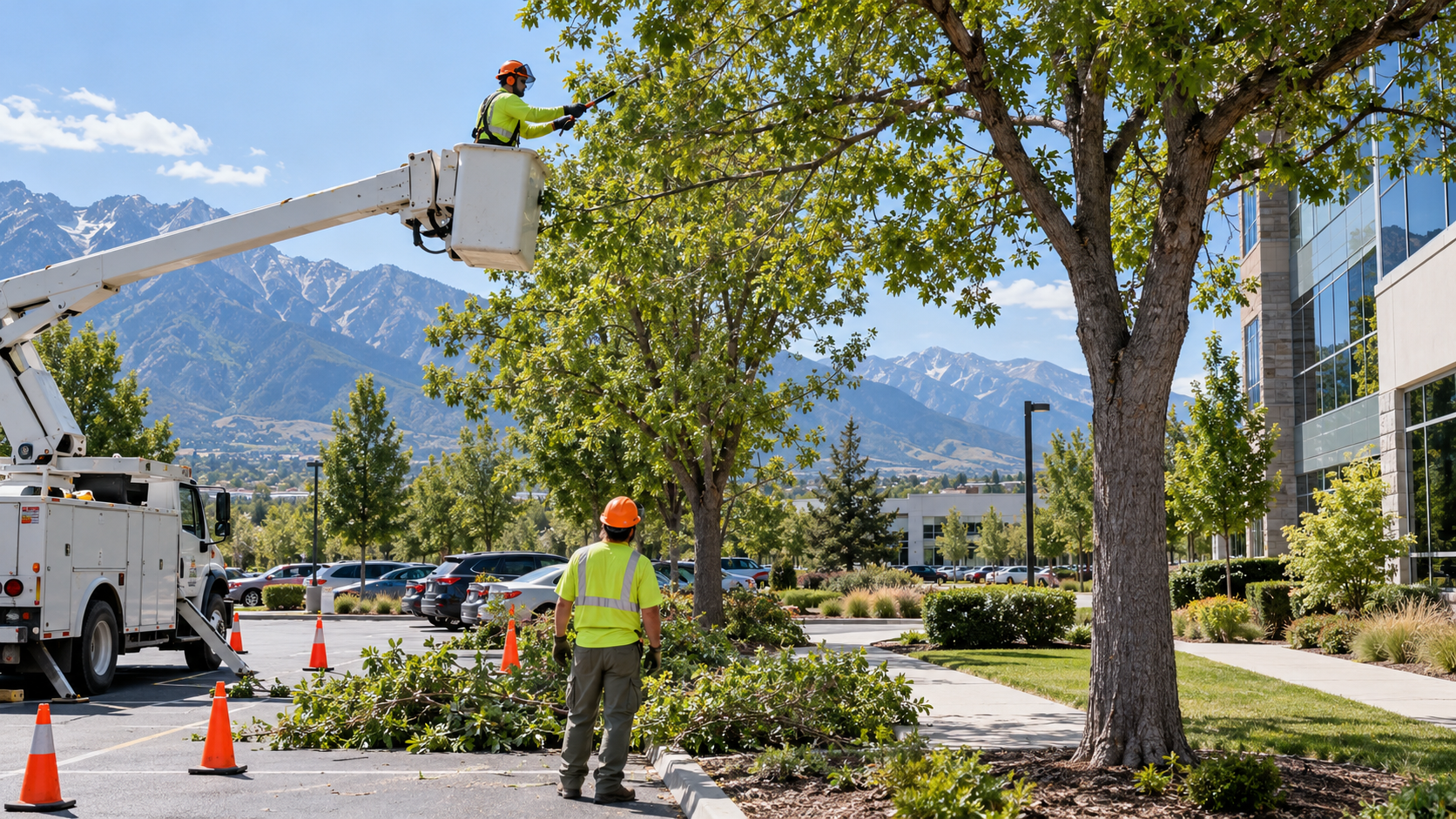
Commercial tree care often involves more coordination than residential work. Trees may share space with vehicles, tenants, employees, customers, sidewalks, delivery routes, buildings, signs, lighting, and other contractors.
Without a plan, tree work can become reactive. A property manager may only address a tree after a storm, after a branch begins blocking access, or after visible decline becomes severe.
Planning helps create time to evaluate options before conditions force a quick decision. It can also make it easier to group related work, communicate with tenants or staff, and budget for higher-priority projects.
Peterson Tree Care’s article on commercial tree liability risks covers several warning signs and property-management concerns that can help inform this type of planning.
Step 1: Start With the Trees and the Property Around Them
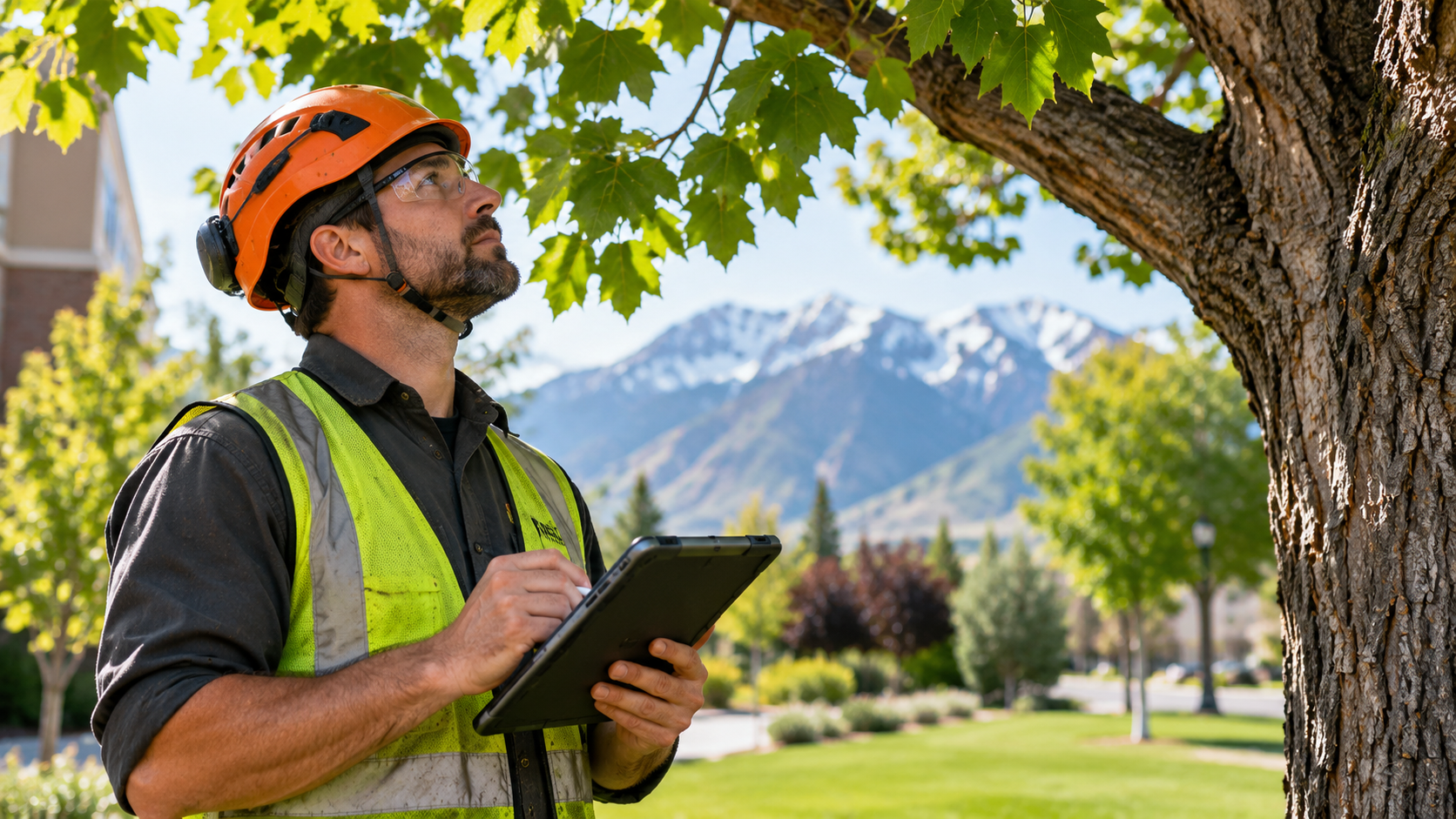
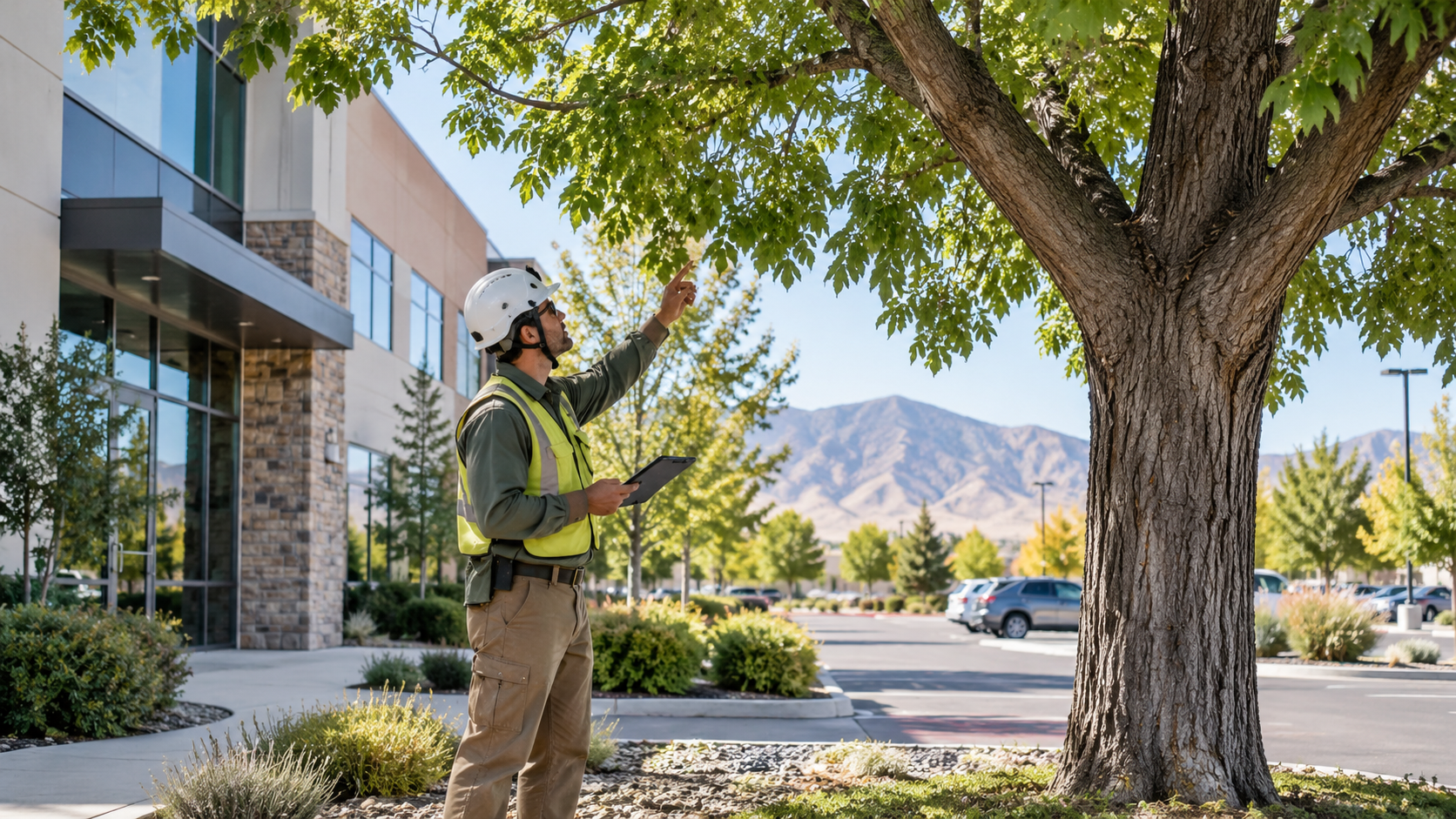
A tree should not be evaluated in isolation. The same branch defect may have very different consequences depending on where the tree is located.
Begin by looking at both tree condition and site use. Important questions include:
- Which trees are near buildings, parking, sidewalks, roads, entrances, or other frequently used areas?
- Are there dead, broken, hanging, or visibly damaged branches?
- Are any trees leaning differently than before or showing root movement?
- Are branches interfering with access, visibility, signs, roofs, or structures?
- Have there been recent storms, construction, trenching, paving, grading, or irrigation changes?
- Are some trees showing repeated decline, canopy thinning, leaf scorch, decay, or other health concerns?
This first step helps separate routine maintenance from issues that deserve closer evaluation.
Step 2: Prioritize Work by Urgency and Business Impact
Not every tree-care need has the same priority. A useful commercial plan groups work based on urgency, condition, location, and how the property is used.
Immediate or High-Priority Concerns
Examples can include large broken or hanging branches, newly exposed structural damage, significant root movement, storm-damaged trees, or other conditions affecting heavily used areas.
Planned Maintenance
This can include pruning for structure, deadwood removal, clearance, shaping, crown reduction, or other work that can be scheduled around property operations.
Monitoring
Some trees may not need immediate work but should be watched for changes in canopy condition, decay, lean, root disturbance, or recurring stress.
Future Replacement or Removal Planning
When a tree is declining or creating a long-term conflict with the site, planning ahead can give the property owner more time to evaluate options and budget for removal or replacement.
For a deeper look at visible structural concerns, see Tree Risk Assessments: Warning Signs of a Potentially Hazardous Tree.
Step 3: Build Pruning Into the Plan for a Specific Reason
Pruning should solve a defined problem rather than simply happen because another year has passed.
On a commercial property, pruning may be appropriate to:
- Remove dead or damaged branches
- Improve branch structure
- Maintain clearance around buildings, parking, sidewalks, roads, or signs
- Address branches that interfere with property use
- Manage specific storm-damaged or poorly positioned growth
- Preserve healthy canopy while correcting a defined concern
Utah State University Extension describes health, hazard reduction, and form as the main reasons for pruning landscape trees. That approach fits commercial planning well: identify the purpose of the work first, then prune accordingly.
Peterson Tree Care’s guide on how often trees should be trimmed in Utah County also explains why pruning frequency should be based on tree condition rather than a universal calendar.
Step 4: Account for Utah County Weather and Water Stress
Long-term planning should include seasonal stress because tree condition can change with heat, drought, wind, snow, and freezing weather.
Utah State University Extension notes that Utah’s dry conditions can stress trees that are not adapted to drought, and that landscape trees generally need deeper irrigation than turfgrass. Commercial landscapes with large parking areas, reflected heat, limited soil space, or changing irrigation patterns may deserve extra attention.
A tree-care plan does not need to prescribe the same watering schedule for every tree. Instead, it should identify where irrigation, drainage, heat exposure, or repeated drought stress may be contributing to decline.
Peterson Tree Care’s article on how Utah County weather affects tree health provides more detail on seasonal stress and warning signs.
Utah State University also provides a landscape tree irrigation guide for Utah that explains why slow, deeper watering is important for established trees.
Step 5: Plan Around Construction and Property Improvements
Commercial properties change over time. New pavement, utilities, sidewalks, signs, landscaping, buildings, grading, and trenching can all affect trees, especially when roots or soil conditions are disturbed.
Root damage may not create obvious canopy symptoms immediately. That makes construction history an important part of long-term tree planning.
Before major property work begins, identify mature trees near the project area and consider how equipment access, excavation, soil compaction, grade changes, or root cutting could affect them.
After construction, trees near disturbed areas may need additional monitoring for canopy decline, root problems, or structural changes.
Step 6: Prepare for Storm and Emergency Tree Work
A long-term plan cannot prevent every storm-related problem. It can, however, make emergency response more organized.
Property managers can document which trees have known concerns, identify areas where access may need to be restricted after severe weather, and know who to contact if a tree or large branch fails.
Peterson Tree Care provides 24-hour emergency and storm-related tree work and specializes in high-risk trimming and removal. Those services can be especially relevant when storm damage affects buildings, parking areas, roads, or other active parts of a commercial property.
Step 7: Review the Plan Instead of Treating It as Permanent
A tree care plan should change when the property changes.
Review priorities when:
- A significant storm affects the site
- A tree develops new deadwood, cracks, decay, or canopy decline
- Construction or grading occurs near established trees
- Irrigation or drainage changes
- Parking, traffic, or pedestrian patterns change
- A new building, sign, sidewalk, or other structure changes tree clearance needs
- A previously monitored tree gets worse
- Tree work has been completed and priorities need to be reset
The purpose of reviewing the plan is to keep it useful. Completed work should come off the priority list, new concerns should be added, and trees that remain stable can continue to be monitored.
What Should Commercial Property Managers Track?
The tracking system does not need to be complicated. For many properties, a simple spreadsheet, map, or written list can be enough.
Useful information can include:
- Tree or area location
- Main concern or maintenance need
- Priority level
- Recommended next action
- Date the tree was last reviewed
- Date work was completed
- Notes about storms, construction, irrigation, or other site changes
- Whether the tree should be monitored again
For larger sites, numbering important trees or dividing the property into zones can make communication easier when requesting estimates or reviewing work.
How Does a Tree Care Plan Help With Budgeting?
A plan does not guarantee lower costs, but it can make budgeting more predictable by separating work that is urgent from work that can be scheduled later.
Instead of receiving one large list with every tree treated as equally important, property managers can prioritize higher-impact work first and plan lower-priority maintenance over time.
This is especially useful for properties with many mature trees, multiple buildings, shared spaces, or recurring capital-planning cycles.
How Often Should a Commercial Tree Care Plan Be Reviewed?
There is no single review schedule that fits every property. The right frequency depends on tree condition, property use, storm exposure, construction activity, and how quickly conditions are changing.
At minimum, the plan should be revisited when a major event or visible change occurs. Properties with many mature trees or active construction may benefit from more frequent review than a small, stable site.
Does Peterson Tree Care Offer Commercial Tree Services?
Yes. Peterson Tree Care serves commercial, residential, and municipal properties in Utah County and surrounding communities. Current services include professional tree trimming and pruning, tree removal, stump grinding, tree health consultations, high-risk trimming and removal, crane services, and emergency/storm work.
Peterson Tree Care also lists HOA/Tree Service Plans among its current services. A specific recurring commercial maintenance-plan structure is not stated on the website, so commercial property owners should discuss their property, priorities, and desired scope directly with the company.
You can review Peterson Tree Care’s current tree care services for more information.
Build a Tree Care Plan Around the Property You Actually Manage
The strongest commercial tree care plan is not a generic annual checklist. It reflects the trees, site, property use, weather exposure, and business priorities of the individual landscape.
Start by identifying urgent concerns, scheduled maintenance, monitoring needs, and longer-term decisions. Then update those priorities as tree conditions and the property change.
If you manage a commercial property in Utah County and want help evaluating current tree-care needs, contact Peterson Tree Care to request a free estimate.
Frequently Asked Questions
What Should Be Included in a Commercial Tree Care Plan?
A commercial tree care plan should identify important trees and problem areas, current health or structural concerns, pruning and clearance needs, trees to monitor, potential removals, storm-response considerations, and priorities for future work. The level of detail should match the size and complexity of the property.
Is a Commercial Tree Care Plan the Same as an Annual Pruning Schedule?
No. Pruning is only one part of tree management. A useful plan can also include health concerns, monitoring, storm damage, root or construction issues, removals, clearance, irrigation concerns, and future budgeting. Trees should be pruned for a clear reason rather than because every tree is placed on the same annual cycle.
Can a Tree Care Plan Prevent All Emergency Tree Problems?
No. Severe weather and unexpected failures can still occur. The value of planning is that known concerns can be prioritized, monitored, and addressed before they are ignored, while the property manager has a clearer process for responding when conditions change.