How Utah County Weather Affects Tree Health
How Utah County Weather Affects Tree Health
Utah County trees experience a wide range of weather conditions throughout the year, including hot, dry summers, freezing winter temperatures, strong winds, heavy snow, occasional late frosts, and periods of drought. These conditions can affect tree health in different ways depending on the species, age, location, root system, and overall condition of the tree.
Weather alone does not automatically mean a tree is unhealthy. However, repeated stress from heat, limited moisture, winter exposure, or storm damage can contribute to decline, especially when a tree already has root problems, structural defects, or other stressors.
How Does Summer Heat Affect Trees in Utah County?
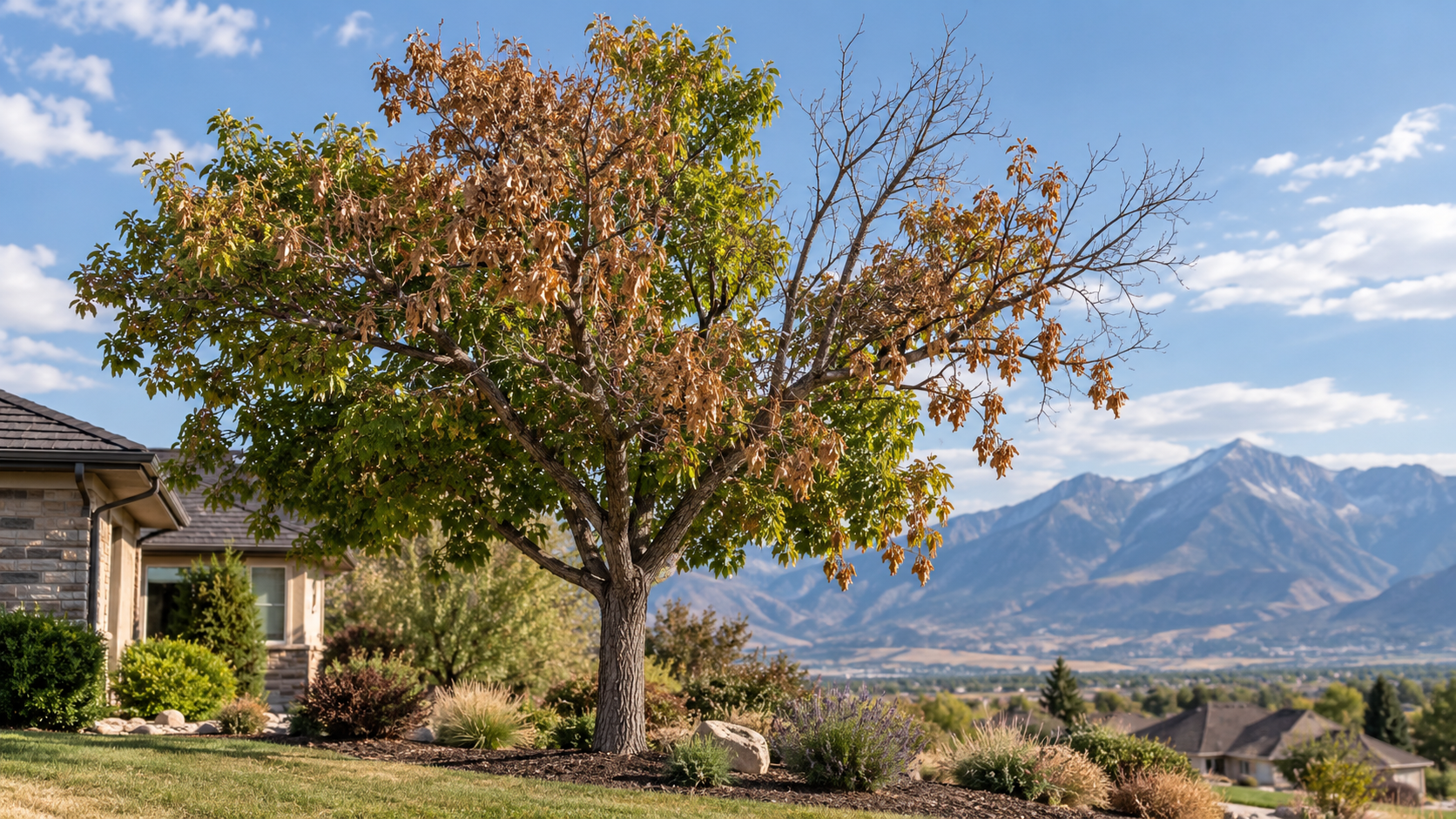
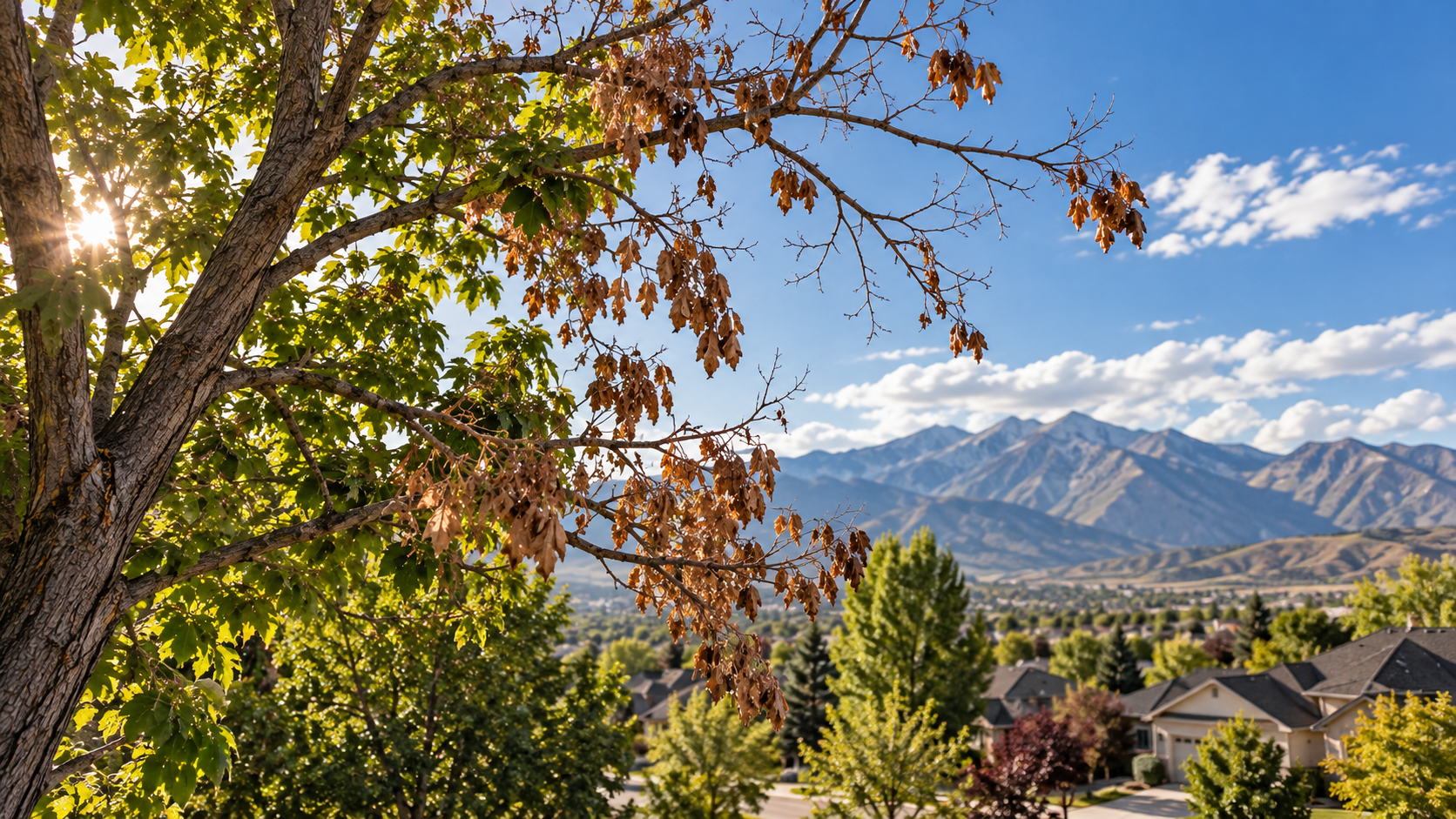
Hot summer weather increases water loss through leaves. When roots cannot replace that moisture quickly enough, trees may show signs of stress.
Common summer-stress symptoms can include:
- Leaf scorch or browning along leaf edges
- Wilting or curling leaves
- Premature leaf drop
- Thinning foliage
- Reduced growth
- Twig or branch dieback
Some trees tolerate hot, dry conditions better than others. Trees that are poorly adapted to Utah’s climate or planted in restrictive sites may show stress sooner.
Peterson Tree Care has additional seasonal guidance in How to Keep Trees Healthy During Utah’s Hot, Dry Summers and Water-Wise Tree Care During Utah Drought Conditions.
Drought Can Create Long-Term Stress
Drought stress is not always limited to one hot week or one dry month. A tree can experience cumulative stress when soil moisture remains low over an extended period.
Repeated drought stress can reduce growth, cause early leaf drop, weaken smaller branches, and make it harder for the tree to recover from other problems.
A tree may also show delayed symptoms. In some cases, stress that begins during one season becomes more visible later.
Why Deep Watering Matters During Dry Weather
Trees generally need moisture deeper in the soil than turfgrass does. Frequent shallow irrigation may keep the soil surface damp without providing enough water across the broader root zone.
When supplemental watering is needed, deeper watering can help encourage moisture where tree roots can use it. The exact amount and frequency depend on species, soil type, tree age, weather, and site conditions.
Overwatering can also create problems when soil remains saturated for long periods. Healthy roots need both moisture and oxygen.
How Winter Weather Can Damage Trees
Winter weather can stress trees through cold temperatures, dry soil, frozen ground, sun exposure, and rapid temperature changes.
Potential winter-related problems can include:
- Twig or branch dieback
- Winter desiccation
- Sunscald on exposed bark
- Cold injury to sensitive species
- Damage from heavy snow or ice
- Delayed spring growth
Some winter injury is not obvious until spring. A tree may look normal during winter but show dead twigs, damaged bark, or weak leaf development once growth begins.
Heavy Snow Can Break Weak Branches
Snow can add substantial weight to branches, particularly when it is wet and heavy. Branches with weak attachments, previous cracks, decay, or poor structure may be more likely to fail under added weight.
Trees with multiple large stems or crowded branch structure can also be more vulnerable in certain conditions.
After a heavy snow event, homeowners should look for broken limbs, fresh cracks, hanging branches, or changes in the canopy.
Windstorms Can Change Tree Conditions Quickly
Strong wind can break limbs, expose structural defects, or disturb roots. A tree that looked stable before a storm may need a closer look afterward.
Warning signs after high winds can include:
- Freshly broken or hanging branches
- New trunk or branch cracks
- A sudden change in lean
- Cracking or lifting soil near the roots
- Newly exposed roots
- Large limbs resting on structures
For a detailed list of structural warning signs, see Peterson Tree Care’s Tree Risk Assessments: Warning Signs of a Potentially Hazardous Tree.
Spring Temperature Swings Can Stress New Growth
Utah County can experience warm spring weather followed by sudden cold temperatures. New leaves, flowers, and tender growth can be more vulnerable to late freezes than dormant wood.
A late frost may damage new foliage without killing the entire tree. The severity depends on the species, stage of growth, temperature, and duration of cold exposure.
Homeowners should avoid assuming a tree is dead immediately after a freeze. Some trees can produce another flush of growth later in the season.
Weather Stress Can Interact With Other Problems
Weather-related stress can become more serious when combined with other issues. A tree with root damage, soil compaction, poor planting depth, previous severe pruning, insect activity, disease, or construction damage may have less ability to tolerate heat, drought, wind, or cold.
This is why diagnosing tree decline requires looking at the full context instead of blaming weather alone.
How Can Homeowners Help Trees Handle Utah County Weather?
Several basic practices can help reduce avoidable stress:
- Water deeply when supplemental irrigation is needed
- Use mulch appropriately to help moderate soil temperature and conserve moisture
- Avoid unnecessary root disturbance
- Prune for a clear structural or maintenance reason
- Watch for storm damage after severe weather
- Choose tree species suited to the site and local conditions
- Have significant decline or structural changes evaluated
Should Trees Be Pruned Before Storm Season?
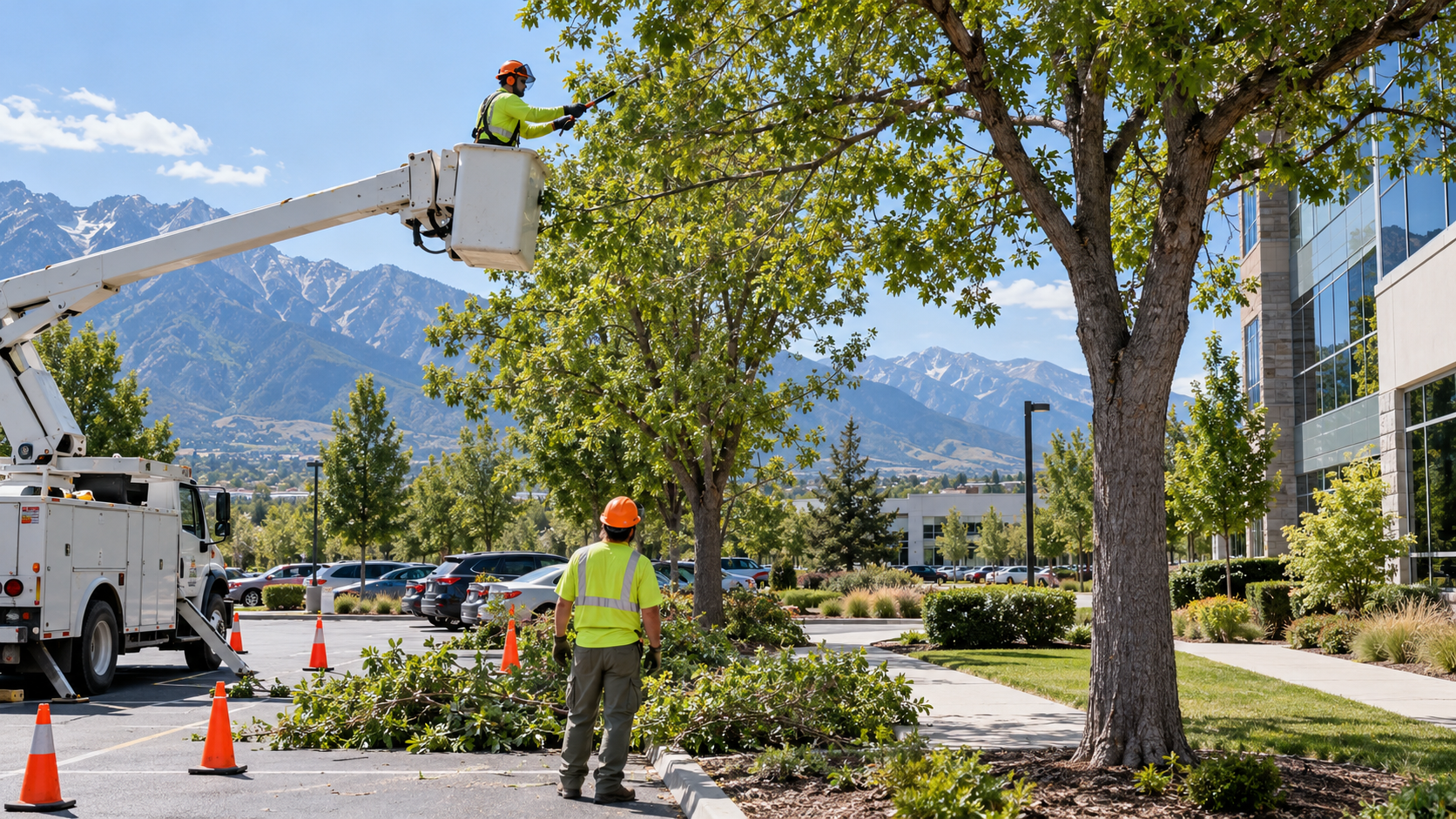
Pruning can help address dead, damaged, crowded, or poorly attached branches when there is a clear reason to remove them. However, pruning should not be done simply to remove as much canopy as possible before bad weather.
Excessive pruning can add stress and may create new problems. The better goal is targeted pruning based on the tree’s structure and condition.
For more context, see The Benefits of Regular Tree Pruning for Homeowners.
When Should Weather-Related Tree Damage Be Evaluated?
Consider professional evaluation when you notice major changes after a storm, freeze, drought period, or other severe weather.
Examples include:
- Large broken branches
- Cracks in the trunk or major limbs
- Sudden canopy thinning
- Progressive branch dieback
- Root movement
- A new lean
- Major bark damage
- Extensive decay or cavities
- Repeated failure to recover after seasonal stress
Tree Health Support in Utah County
Peterson Tree Care provides tree health consultations, professional pruning, tree removal, high-risk trimming and removal, and 24-hour emergency and storm-related tree work for Utah County and surrounding communities.
You can review Peterson Tree Care’s tree care services to learn more about available options.
Concerned About Weather Damage to a Tree?
If a tree on your property has been damaged by wind, snow, heat, drought, or another weather event, Peterson Tree Care can evaluate the condition and discuss appropriate next steps.
Contact Peterson Tree Care to request a free estimate for tree care in Utah County.
Frequently Asked Questions
Can Hot Weather Kill a Tree?
Yes, severe or prolonged heat can contribute to tree decline, especially when it is combined with drought, root damage, poor soil conditions, or other stresses. Heat alone is not always the only cause.
Can a Tree Recover From Drought Stress?
Sometimes. Recovery depends on the severity and duration of the stress, the tree species, root condition, and whether other problems are present. Mild stress may improve with better care, while severe or repeated drought can contribute to long-term decline.
Should I Worry About a Tree After a Windstorm?
A tree deserves a closer look after a significant windstorm if you notice hanging branches, new cracks, root movement, a sudden change in lean, or other visible structural changes.