The Benefits of Regular Tree Pruning for Homeowners
The Benefits of Regular Tree Pruning for Homeowners
Regular tree pruning can help homeowners maintain healthier structure, remove dead or damaged branches, improve clearance around the property, and guide the long-term growth of a tree. The key is that pruning should have a clear purpose. More cutting is not automatically better.
For homeowners in Utah County, pruning can be especially useful when trees are growing near roofs, driveways, sidewalks, fences, or other parts of the property, or when branches have been affected by storms, age, or previous damage.
A good pruning plan considers the tree’s species, age, condition, structure, location, and the reason for the work. That is why regular pruning is best understood as condition-based maintenance rather than a rigid annual task.
What Are the Main Benefits of Regular Tree Pruning?
The biggest benefits of regular tree pruning are better branch structure, removal of dead or damaged growth, improved clearance, and the opportunity to address developing problems before they become more difficult to manage.
For many residential trees, professional pruning can help with:
- Removing dead, broken, or damaged branches
- Improving branch structure as the tree grows
- Reducing crossing or rubbing branches
- Maintaining appropriate clearance from roofs, driveways, sidewalks, and other structures
- Managing branches that extend into unwanted areas
- Improving the overall form of the tree without unnecessary canopy removal
- Identifying tree-health or structural concerns that deserve closer attention
Pruning Can Improve Tree Structure
One of the most important reasons to prune is to guide tree structure. Young and developing trees can form competing leaders, crowded branches, weak attachments, or crossing limbs. Addressing some of these issues while branches are smaller can be easier than waiting until they become large structural problems.
Utah State University Extension describes health, hazard reduction, and form as the main reasons for pruning landscape trees. It also recommends pruning with a clear objective instead of removing healthy branches from a tree that already has good form.
Homeowners who want a deeper explanation of the terminology can also read Peterson Tree Care’s guide to tree trimming vs. pruning.
Pruning Helps Remove Dead and Damaged Branches
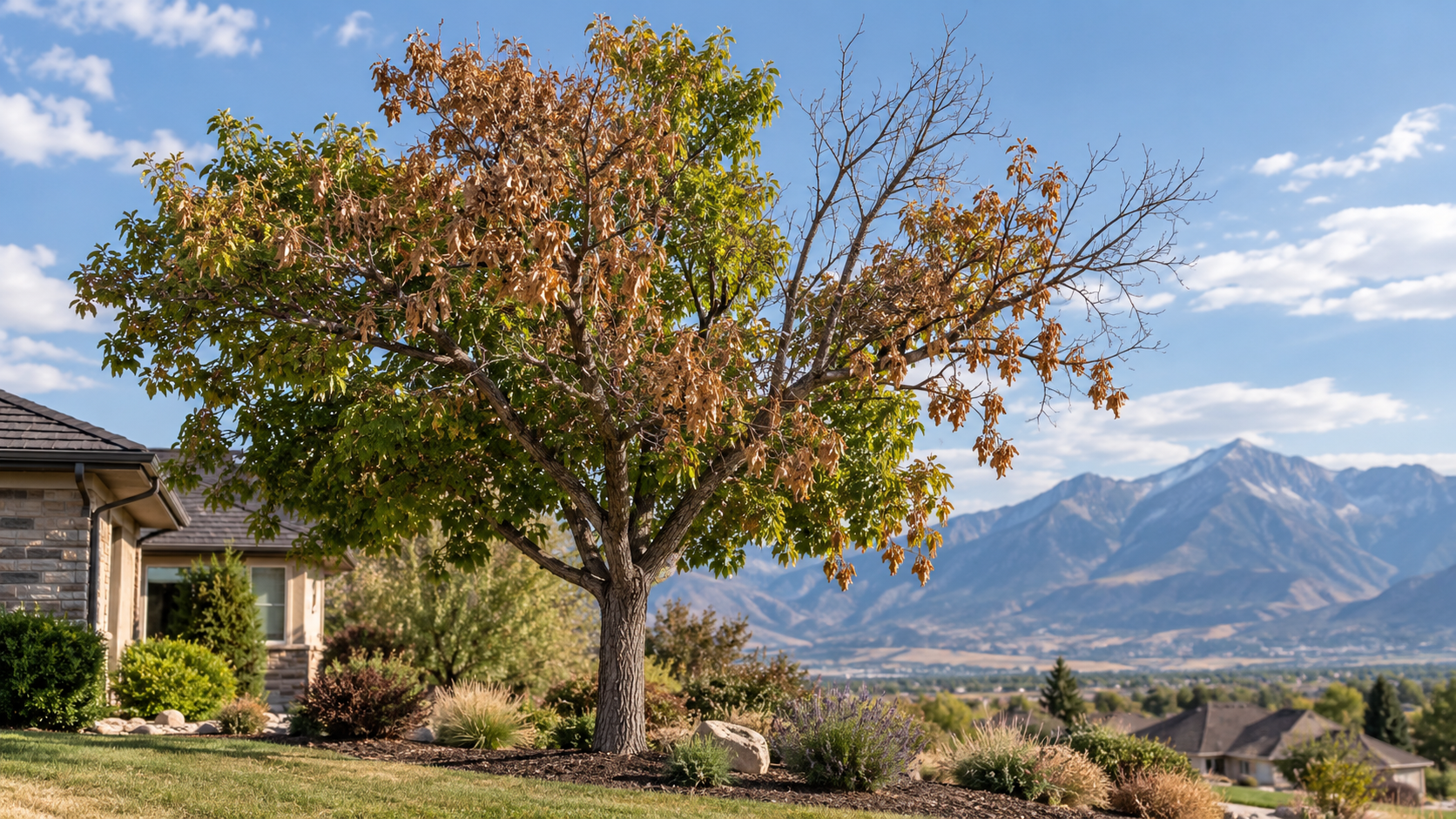
Dead, broken, or damaged branches no longer contribute healthy growth to the canopy and may become a concern when they are located above homes, driveways, patios, sidewalks, or other frequently used areas.
Pruning can remove those branches while preserving healthy parts of the tree when possible. This is different from automatically removing a tree because it has a defect. The right response depends on the location and severity of the problem, the tree’s overall condition, and what could be affected if a branch fails.
If you are seeing cracks, decay, hanging limbs, root movement, or major storm damage, Peterson’s article on tree warning signs and risk explains when a closer professional evaluation may be appropriate.
Pruning Can Improve Clearance Around a Home
Trees often share space with roofs, gutters, fences, driveways, sidewalks, signs, and other parts of a residential property. As branches grow, some may begin to interfere with those areas.
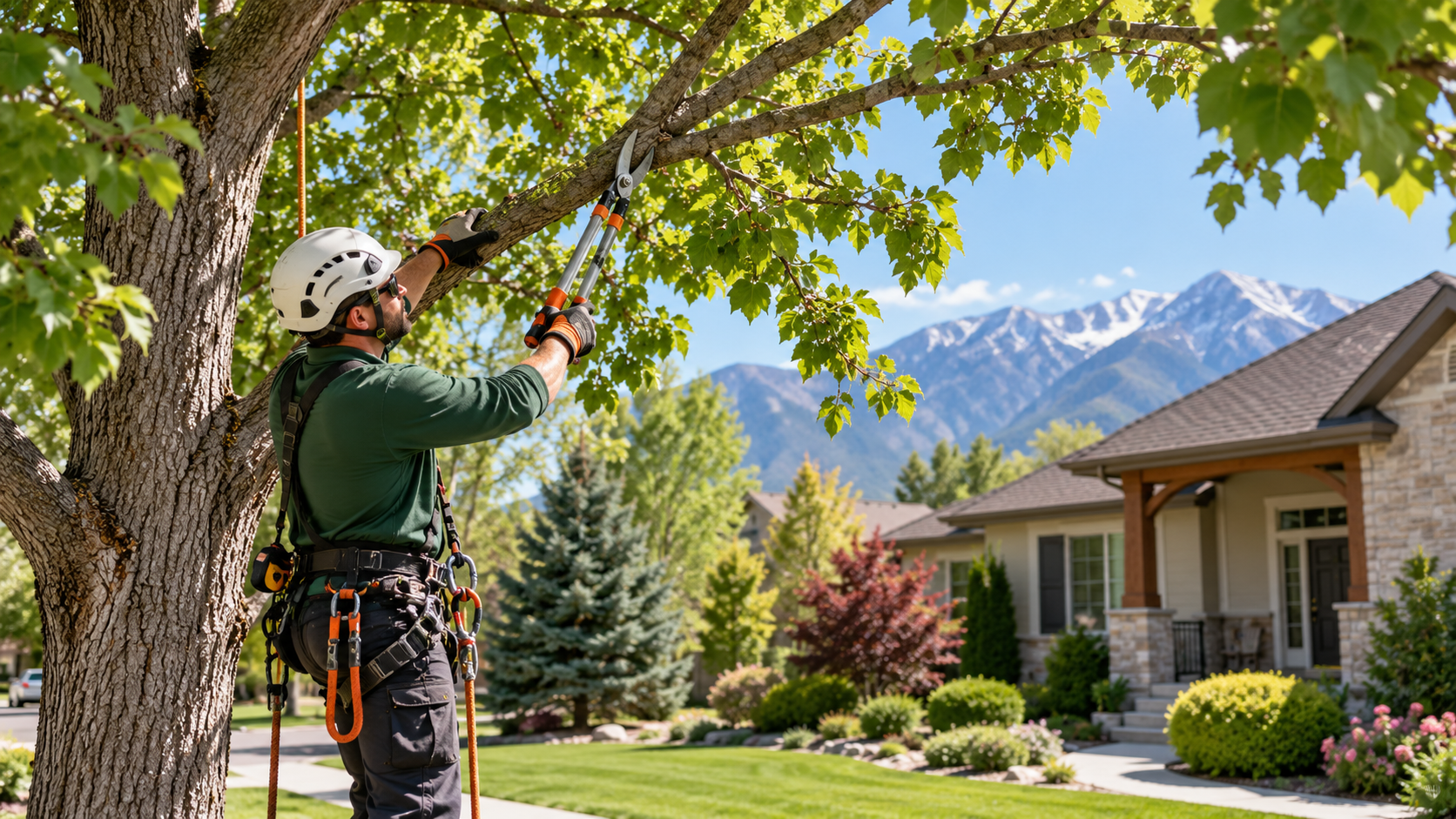
Targeted pruning can help maintain appropriate clearance without removing more of the canopy than necessary. Depending on the tree and the goal, this may involve crown raising, crown reduction, shaping, thinning, deadwooding, or other pruning methods.
A branch growing over a structure does not automatically need to be removed. Its condition, attachment, clearance, and the way it fits into the tree’s structure should guide the decision.
Regular Pruning Can Support Long-Term Tree Health
Pruning is not a cure for every tree-health problem, but appropriate pruning can support long-term care by removing certain dead, damaged, diseased, crowded, or poorly positioned branches.
It can also make changes in the canopy easier to notice over time. When a tree is evaluated periodically, homeowners may be more likely to catch new deadwood, storm damage, structural changes, or other concerns before they are ignored for years.
The goal should be to preserve healthy leaf area and tree structure while addressing specific problems.
Can Too Much Pruning Hurt a Tree?
Yes. Excessive pruning can stress a tree because leaves produce the food that supports growth and recovery. Removing too much healthy canopy can reduce that capacity and may expose previously shaded branches or bark to additional stress.
Utah State University Extension advises avoiding removal of more than roughly 20 to 25 percent of a tree’s leaf area in a single year and notes that mature or stressed trees generally tolerate heavy pruning less well than young, vigorous trees. USU’s pruning overview also emphasizes purposeful pruning rather than unnecessary cutting.
This is one reason topping or indiscriminate branch removal is not the same as professional pruning.
How Often Should Homeowners Prune Their Trees?
There is no universal pruning schedule for every tree. Peterson Tree Care currently uses a 2–5 year range as a general guideline for many Utah County trees, but the tree’s condition matters more than the calendar.
A tree may need attention sooner when there are dead or broken limbs, storm damage, clearance conflicts, structural concerns, or another specific reason to prune. A healthy mature tree with no significant problems may go longer between major pruning visits.
For more detail, see How Often Should Trees Be Trimmed in Utah County?
When Is the Best Time to Prune Trees in Utah County?
For many landscape trees, late winter through early spring can be a good time for pruning because the tree is dormant and the branch structure is easier to see. However, the best timing depends on the species, condition of the tree, and reason for pruning.
Dead, broken, or hazardous branches may need attention outside the preferred seasonal window. Some species also have pruning considerations that differ from the general rule.
If the reason for pruning is unclear, it is better to evaluate the tree first than to prune simply because a certain month has arrived.
When Should You Call a Professional?
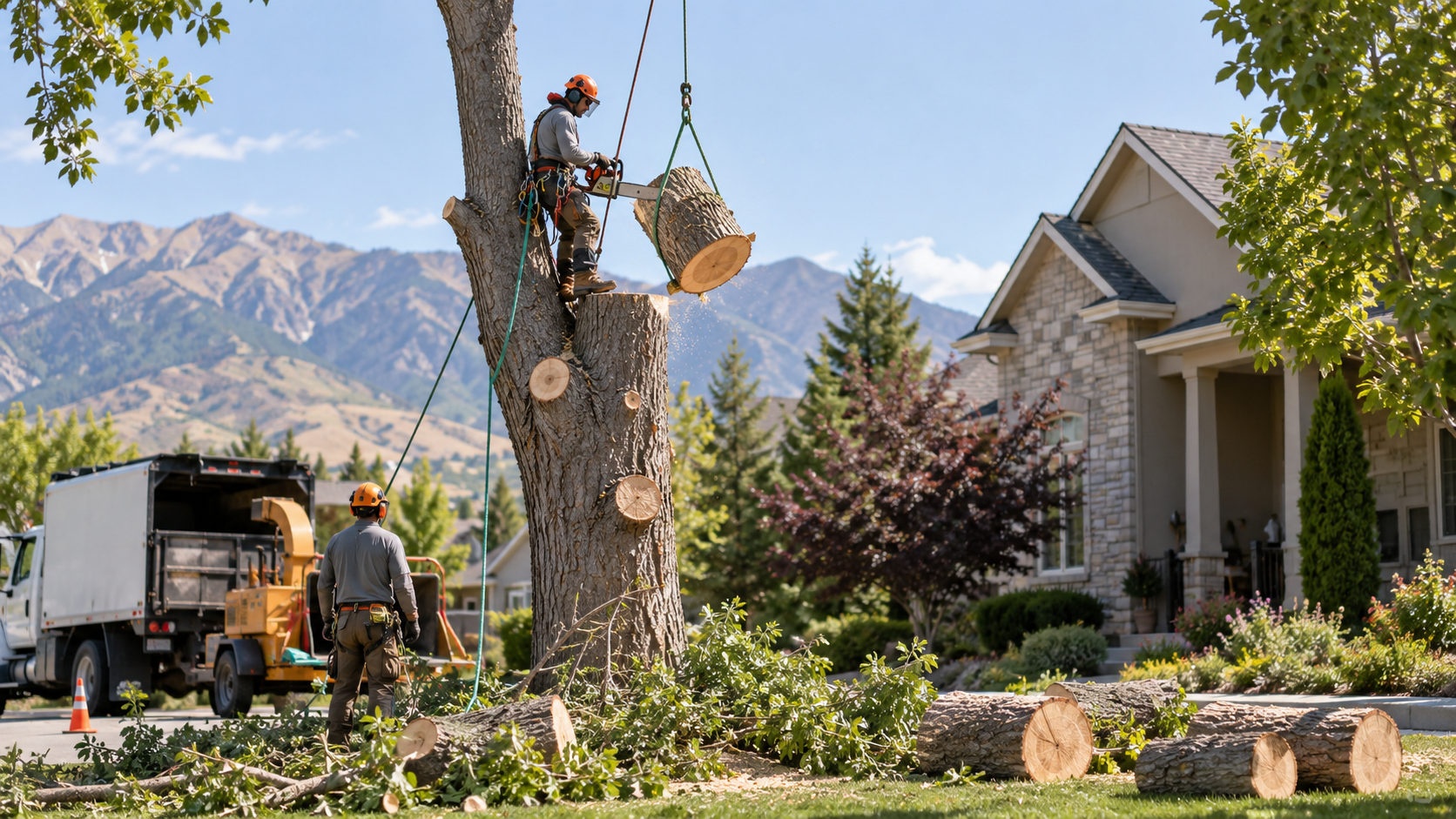
Small, accessible branches may be manageable for some homeowners, but large-tree pruning can involve falling limbs, ladders, chainsaws, rigging, traffic, structures, and utility lines.
Professional help is especially appropriate when:
- Large branches need to be removed
- Branches are high in the canopy
- The tree is close to a home or other structure
- There is visible decay, cracking, or storm damage
- The tree has a complicated structure
- Branches are near energized utility lines
- You are unsure how much canopy can be removed safely
Work near energized utility lines requires specialized training and should not be treated as a do-it-yourself pruning project.
Professional Tree Pruning in Utah County
Peterson Tree Care provides professional tree trimming and pruning for residential properties throughout Utah County and surrounding communities. Current services include structural pruning, deadwooding, thinning, shaping, crown reduction, canopy cleaning, crown raising, and other pruning work based on the needs of the tree and property.
Peterson Tree Care also provides tree health consultations, tree removal, high-risk trimming and removal, and emergency and storm-related tree work. You can review the current tree care services for more information.
Need Help With Pruning on Your Property?
If your trees have dead branches, storm damage, clearance problems, or have not been evaluated in several years, a professional look can help determine whether pruning is needed and what type of work makes sense.
Contact Peterson Tree Care to request a free estimate for professional tree pruning in Utah County.
Frequently Asked Questions
Does Pruning Make a Tree Healthier?
Pruning can support tree health when it removes dead, damaged, diseased, crowded, or poorly positioned branches for a specific reason. Unnecessary or excessive pruning can create additional stress, so the goal should be targeted pruning rather than simply removing as much growth as possible.
How Often Should Mature Trees Be Pruned?
Many Utah County trees may benefit from professional pruning every 2–5 years as a general guideline, but there is no schedule that fits every tree. Species, age, condition, structure, location, growth rate, and recent damage all affect timing.
Is Winter the Best Time to Prune Trees?
Late winter through early spring is often a good time to prune many landscape trees because they are dormant and their structure is easier to evaluate. The best timing still depends on the tree and the reason for pruning, and damaged or hazardous branches may require attention at other times.