What Causes Trees to Die in Utah?
What Causes Trees to Die in Utah?
Trees in Utah can die from drought stress, extreme heat, poor watering, root damage, soil problems, winter injury, insects, disease, storm damage, improper pruning, or a combination of several stresses over time.
A declining tree rarely tells you the cause with one obvious symptom. Leaf scorch, thinning foliage, dead branches, peeling bark, early leaf drop, decay, or reduced growth can have more than one possible explanation.
For Utah County homeowners, the most useful approach is to look at the whole tree and its growing conditions rather than assuming a single pest or disease is responsible.
Why Do Trees Decline in Utah?
Utah’s dry climate can be challenging for landscape trees, particularly species that are not well adapted to heat, low humidity, limited soil moisture, or local soil conditions.
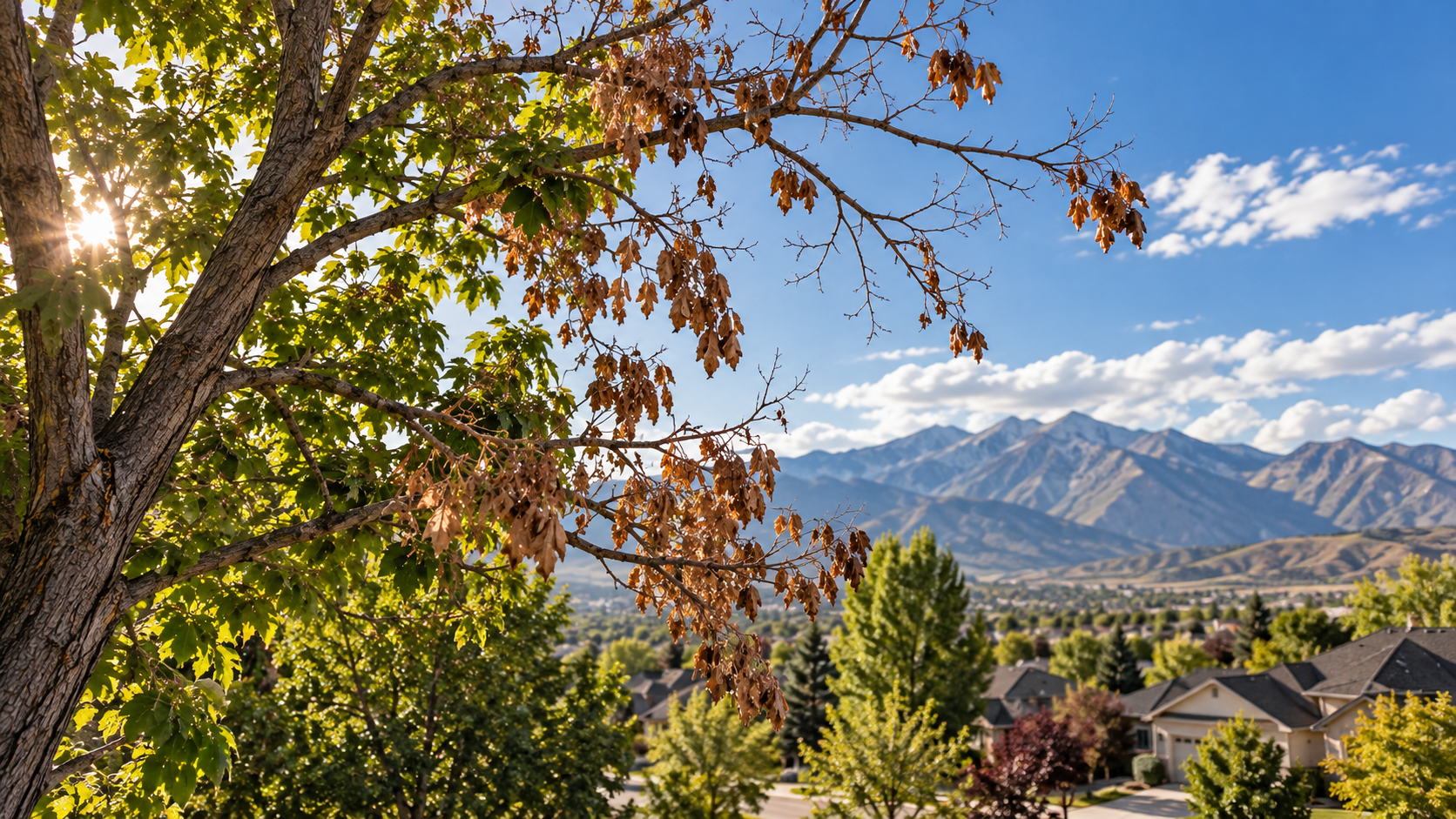
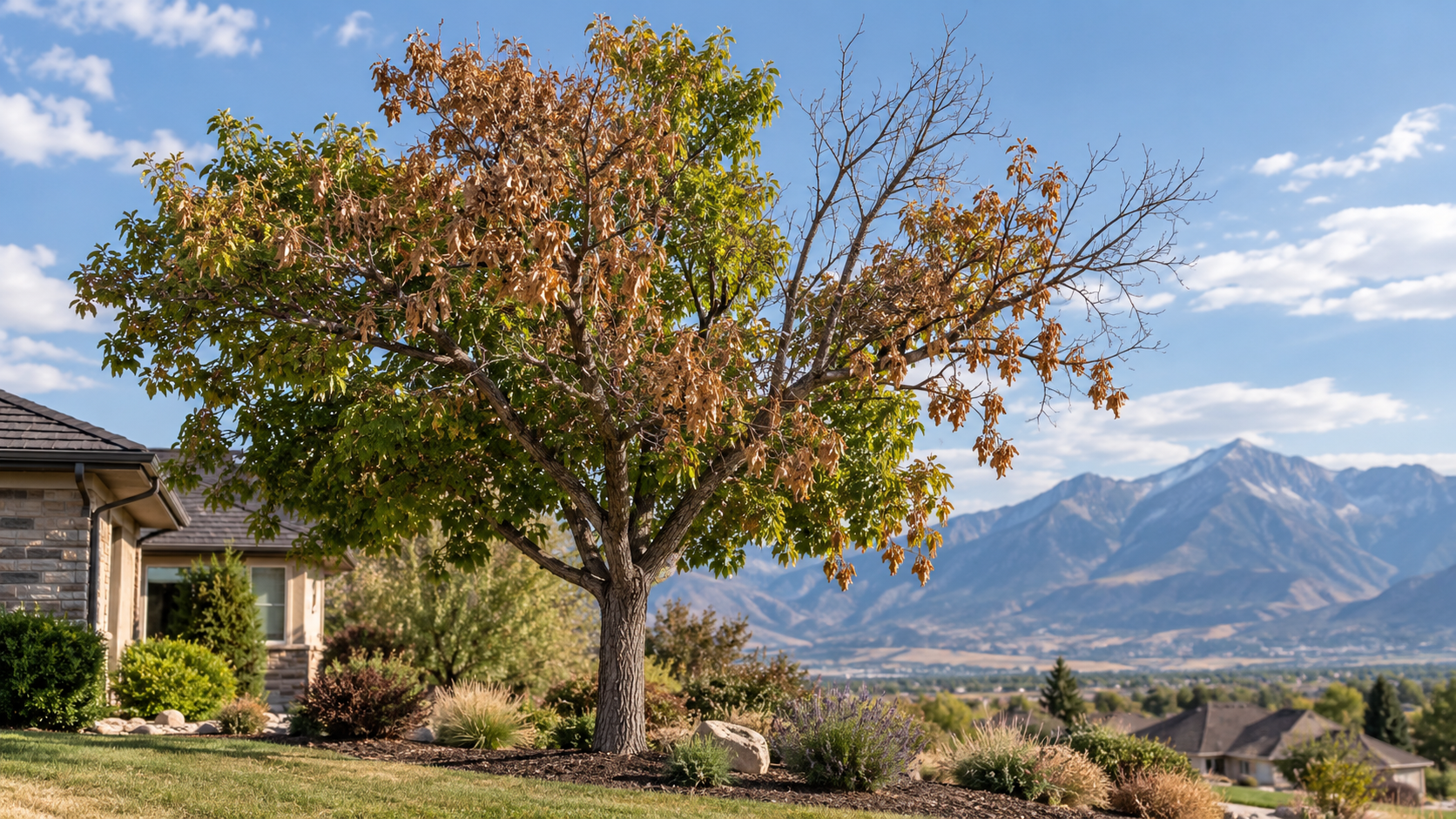
Utah State University Extension notes that drought stress in trees can show up as wilting, leaf scorch, yellowing, premature leaf drop, leaf death, and overall decline. Stress can also make an already weakened tree less able to tolerate additional problems.
In many cases, tree decline is cumulative. A tree may experience drought one year, root disturbance the next, and then insect, disease, or winter damage after its defenses have already been reduced.
Drought and Underwatering
Water stress is one of the most common challenges for Utah landscape trees. Trees have deeper and more extensive root systems than turfgrass, so watering only the lawn surface may not provide enough moisture where tree roots need it.
Common signs of drought stress can include:
- Wilting or curling leaves
- Brown or scorched leaf edges
- Premature fall color
- Early leaf drop
- Thinning foliage
- Twig or branch dieback
- Slowed growth
USU Extension recommends less frequent, deeper watering in the root zone rather than frequent shallow watering for drought-stressed trees. Its drought and underwatering guidance also notes that Utah’s dry conditions can be especially stressful for trees that are not drought adapted.
Peterson Tree Care has additional guidance on water-wise tree care during Utah drought conditions.
Extreme Heat and Low Humidity
Hot, dry summer weather increases the amount of water a tree must move from the soil to its leaves. When the root system cannot keep up with that demand, leaves may scorch, wilt, or drop early.
Late-summer browning does not always mean a tree is dying. Some trees show seasonal leaf scorch during periods of intense heat and low humidity and recover normally the following spring. Persistent dieback, repeated canopy thinning, or symptoms that continue to worsen deserve closer attention.
For summer-specific care, see Peterson’s guide to keeping trees healthy during Utah’s hot, dry summers.
Root Damage and Soil Compaction
A tree can have a green canopy while serious problems are developing underground. Roots provide water, nutrients, anchorage, and stored energy, so damage to the root system can affect both health and stability.
Root problems can develop after:
- Excavation or trenching
- Driveway or sidewalk work
- Construction near mature trees
- Repeated heavy-equipment traffic
- Severe soil compaction
- Major grading changes
- Cutting large roots
- Adding or removing significant amounts of soil around an established tree
Damage below ground may not become obvious immediately. A tree can decline gradually after root loss or soil disturbance.
Poor Watering and Drainage
Too little water is a common problem in Utah, but too much water can also contribute to poor root conditions. Roots need both moisture and oxygen.
Constantly saturated soil, drainage problems, or irrigation that does not match the tree’s needs can contribute to root stress. On the other hand, short, shallow watering may encourage surface moisture without adequately wetting the broader root zone.
The correct watering approach depends on the tree species, soil, age, weather, root area, and irrigation system.
Winter Injury and Temperature Swings
Utah trees also face winter stresses that can be easy to overlook. Cold temperatures, sudden temperature changes, frozen or dry soil, winter sun, and wind can damage plant tissues.
USU Extension describes several forms of winter injury, including winter desiccation and sunscald. Winter desiccation occurs when a tree or evergreen loses moisture while roots cannot replace it because the soil is dry or frozen. Sunscald can damage bark when sunny winter days warm exposed tissue and nighttime temperatures then drop sharply.
Winter injury may not become obvious until spring, when homeowners notice dead twigs, branch dieback, delayed growth, damaged bark, or weak foliage.
Insects and Tree Diseases
Insects and diseases can contribute to tree decline, but symptoms should be identified before treatment decisions are made. Similar-looking leaf or branch problems can come from drought, nutrient issues, root damage, winter injury, pests, or disease.
Potential warning signs include unusual leaf damage, repeated defoliation, boring activity, cankers, abnormal growth, fungal fruiting bodies, or progressive dieback.
Correct identification matters because treating the wrong problem wastes time and may not help the tree.
Storm Damage
Strong wind, heavy snow, and severe weather can break branches, split weak attachments, disturb roots, or create damage that changes a tree’s condition quickly.
After a significant storm, look for freshly broken limbs, hanging branches, new cracks, a sudden change in lean, or lifting soil around the root system.
Peterson Tree Care provides 24-hour emergency and storm-related tree work and specializes in high-risk trimming and removal. For structural warning signs, review Tree Risk Assessments: Warning Signs of a Potentially Hazardous Tree.
Improper or Excessive Pruning
Pruning can be beneficial when it has a clear objective, but poor pruning can add stress or create structural problems.
Removing excessive healthy canopy reduces the leaf area the tree uses to make food. Large improper cuts, repeated topping, or removing branches without considering structure can also lead to weak regrowth or long-term defects.
Good pruning focuses on what needs to be removed while preserving healthy growth whenever possible.
The Wrong Tree in the Wrong Place
Some tree problems begin with species selection or planting location. A tree may struggle when its mature size, water needs, soil tolerance, sun exposure, or cold hardiness do not fit the site.
Trees planted too deeply, confined to small rooting spaces, or placed where future growth conflicts with structures can experience chronic stress.
A tree can sometimes survive in a difficult site for years before multiple stresses lead to visible decline.
What Are the Warning Signs of a Dying Tree?
No single symptom proves that a tree is dying, but noticeable changes are worth investigating.
Watch for:
- Large areas of dead or thinning canopy
- Repeated premature leaf drop
- Progressive branch dieback
- Major cracks or splits
- Loose or peeling bark associated with dead tissue
- Extensive decay or cavities
- Fungal growth around the trunk or root flare
- Significant root damage
- Sudden lean or soil movement
- Failure to recover normally after seasonal stress
Peterson Tree Care’s tree care FAQs also outline common signs of an unhealthy tree and when professional evaluation may help.
Can a Declining Tree Be Saved?
Sometimes. Whether a tree can recover depends on the cause, how much of the tree is affected, the condition of the roots and structure, and whether the underlying problem can be corrected.
A tree with temporary drought stress may respond to improved care. A tree with minor deadwood may benefit from pruning. A tree with severe decay, major root failure, or extensive structural damage may have fewer reasonable options.
If you are unsure whether a tree can be preserved, Peterson’s guide Can a Tree Be Saved or Does It Need to Be Removed? explains the decision in more detail.
How Can Homeowners Reduce Tree Stress?
Homeowners cannot control every weather event or pest, but several basic practices can reduce avoidable stress:
- Water deeply enough to reach the root zone when supplemental irrigation is needed
- Use mulch appropriately to help conserve soil moisture and moderate soil temperature
- Avoid damaging roots during construction or landscaping
- Keep heavy equipment and repeated traffic away from important root areas when possible
- Prune for a clear reason rather than removing healthy canopy unnecessarily
- Watch for significant changes after storms or construction
- Have unusual decline or structural concerns evaluated before they become more severe
Tree Health Consultations in Utah County
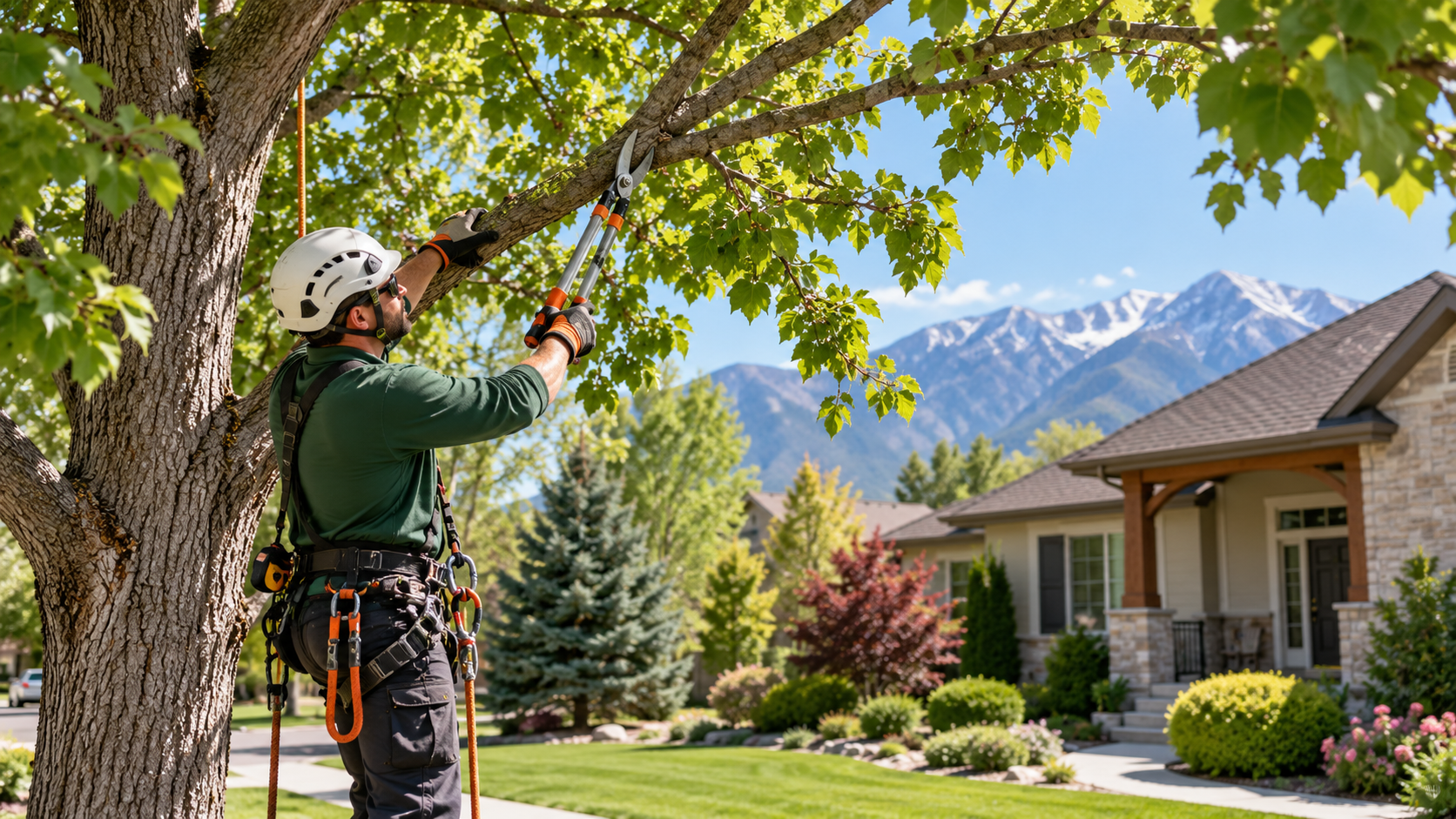
Peterson Tree Care provides tree health consultations for homeowners and property owners throughout Utah County and surrounding communities. The team also provides professional pruning, tree removal, high-risk trimming and removal, and emergency and storm-related tree work.
The goal of an evaluation is not to assume every declining tree should be removed. It is to understand the condition of the tree, identify meaningful concerns, and determine what next step is appropriate.
Concerned About a Declining Tree?
If a tree on your property is losing branches, thinning, showing decay, declining after construction, or failing to recover from weather stress, Peterson Tree Care can evaluate the condition and discuss appropriate tree-care options.
Contact Peterson Tree Care to request a free estimate for tree care in Utah County.
Frequently Asked Questions
Can Drought Kill a Mature Tree?
Yes. Prolonged or severe water stress can contribute to decline and death, especially when a tree is already weakened by root damage, poor site conditions, pests, disease, or previous stress. Mature trees can also show delayed symptoms after a drought period.
Does Brown Leaf Scorch Mean a Tree Is Dying?
Not necessarily. Utah trees can develop leaf scorch during hot, dry, low-humidity weather and still recover normally. Persistent canopy thinning, progressive branch dieback, or symptoms that return more severely each year deserve closer evaluation.
When Should a Dead or Dying Tree Be Removed?
Removal may be appropriate when a tree is dead, has severe structural or root failure, has extensive decay, or presents a concern that cannot reasonably be reduced through pruning or other care. The decision should consider both the tree’s condition and what could be affected if part or all of it fails.