What Does a Certified Arborist Do?
What Does a Certified Arborist Do?
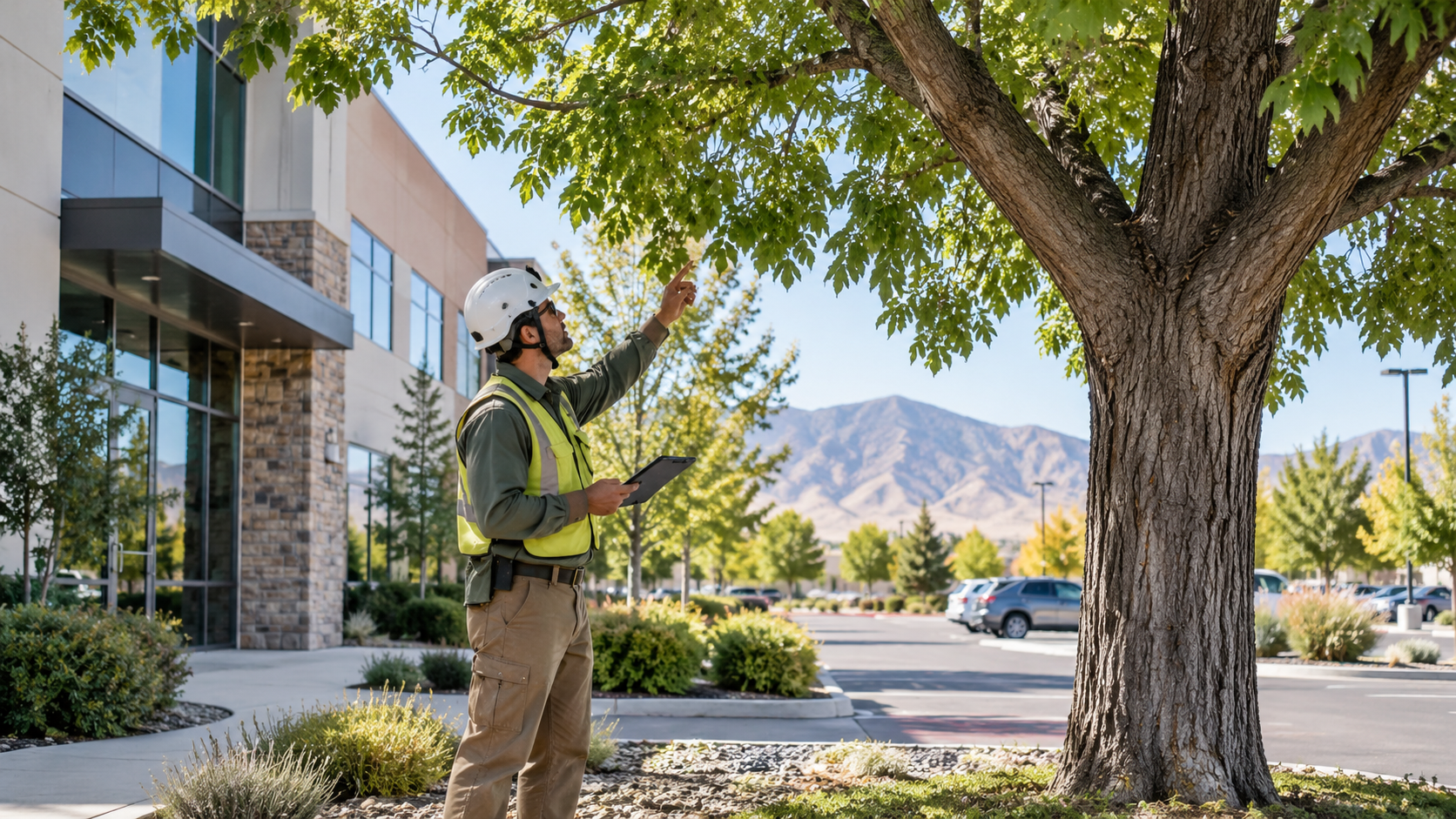
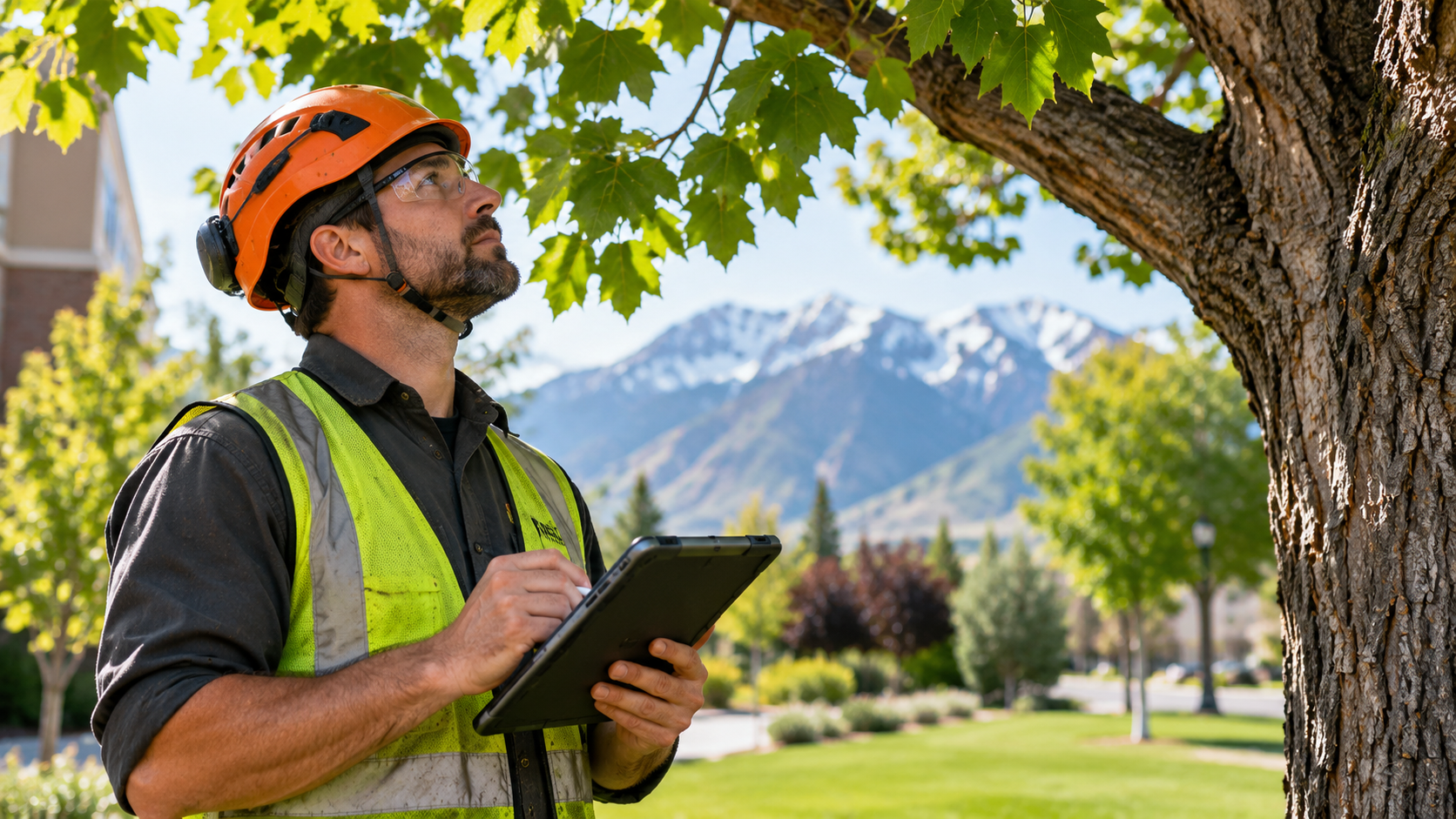
A certified arborist is a tree-care professional who has demonstrated a defined level of knowledge and practical experience in arboriculture. Arborists evaluate trees, identify health and structural concerns, recommend appropriate care, and help property owners make informed decisions about pruning, monitoring, treatment, or removal.
For homeowners, businesses, and property managers in Utah County, a certified arborist can be especially useful when a tree is declining, has storm damage, is growing near a structure, needs major pruning, or may need to be removed.
The important distinction is that an arborist’s job is not simply to cut trees. Professional arboriculture is about understanding how trees grow, how they respond to stress and pruning, how site conditions affect them, and what type of work is appropriate for the individual tree.
What Is an ISA Certified Arborist?
The International Society of Arboriculture, or ISA, administers the ISA Certified Arborist credential. ISA describes the certification as a voluntary professional credential that demonstrates a generally accepted level of knowledge and skill in arboriculture.
To qualify for the ISA Certified Arborist exam, candidates generally need at least three years of full-time arboriculture experience or an approved combination of education and practical experience. The certification exam covers areas such as tree biology, diagnosis, maintenance practices, pruning, safety, and other arboricultural topics. Certified arborists must also maintain the credential through continuing education and follow the ISA Code of Ethics.
Peterson Tree Care states that its team includes International Society of Arboriculture Certified Arborists, and the company serves residential, commercial, and municipal properties throughout Utah County.
What Does a Certified Arborist Actually Do?
A certified arborist may perform or advise on many different types of tree-care work. The exact role depends on the property, the tree, and the reason the customer requested help.
Common areas of arborist work include:
- Evaluating tree health and visible symptoms
- Assessing branch and trunk structure
- Recommending pruning based on tree condition and goals
- Identifying dead, damaged, crowded, or poorly positioned branches
- Evaluating whether a declining tree may be retained or should be removed
- Looking at roots, soil, construction impacts, irrigation, and other site conditions
- Identifying potential pest, disease, or environmental stress symptoms
- Helping property owners prioritize tree-care work
- Recognizing situations that require specialized equipment, line-clearance training, or additional expertise
A professional recommendation should be based on the condition of the tree and its surroundings rather than a one-size-fits-all treatment.
Certified Arborists Evaluate Tree Health
Trees can decline for many reasons, including drought stress, root damage, soil problems, improper watering, construction activity, insects, disease, winter injury, storm damage, or a combination of several factors.
A certified arborist looks beyond a single symptom. Brown leaves, dead branches, thinning foliage, bark damage, fungal growth, or reduced growth can have more than one possible cause.
A tree-health evaluation may consider:
- The amount and pattern of canopy dieback
- Leaf color, scorch, distortion, or premature leaf drop
- Dead or declining branches
- Trunk wounds, cavities, or decay
- Root-zone conditions
- Changes in irrigation or drainage
- Recent construction or soil disturbance
- Evidence of insects or disease
- Weather and seasonal stress
- The tree species, age, and growing conditions
Peterson Tree Care provides tree health consultations as part of its current services. Its article What Causes Trees to Die in Utah? explains several common causes of decline in more detail.
Certified Arborists Help Plan Pruning
Pruning is one of the most common reasons property owners call a tree-care company, but pruning should have a clear objective.
An arborist may recommend pruning to:
- Remove dead, broken, or damaged branches
- Improve branch structure
- Reduce crossing or rubbing branches
- Maintain appropriate clearance
- Manage certain weak or poorly attached branches
- Improve the long-term form of a young or developing tree
- Address specific storm damage
The goal is not to remove as much of the canopy as possible. Excessive or poorly planned pruning can stress a tree or create structural problems.
Peterson Tree Care offers structural pruning, deadwooding, thinning, shaping, crown reduction, canopy cleaning, crown raising, and other professional pruning services. For more detail, see What Is the Difference Between Tree Trimming and Tree Pruning?.
Certified Arborists Can Help Evaluate Tree Risk
Trees do not need to be perfectly healthy or perfectly shaped to remain on a property. The purpose of an evaluation is to identify meaningful conditions and understand what could happen if a branch or tree fails.
Visible warning signs can include:
- Large dead or hanging branches
- Cracks or splits in the trunk or major limbs
- Significant decay or cavities
- Root damage or soil movement
- A sudden change in lean
- Fresh storm damage
- Weak major branch attachments
- Construction damage near the root system
One warning sign does not automatically mean the tree needs to be removed. Depending on the condition, pruning, monitoring, site management, or another type of care may be appropriate.
Peterson Tree Care’s tree risk assessment guide explains visible warning signs and what homeowners can look for before requesting professional evaluation.
Does a Certified Arborist Decide Whether a Tree Should Be Removed?
A certified arborist can help evaluate whether removal is appropriate, but the answer depends on the individual tree and site.
Removal may be considered when a tree is dead, severely declining, structurally compromised, badly damaged, or creating a problem that cannot reasonably be reduced through pruning or other care.
On the other hand, some trees with defects can remain when the problem is manageable and the overall condition is acceptable.
Peterson Tree Care’s article Can a Tree Be Saved or Does It Need to Be Removed? walks through that decision in more detail.
What Does a Certified Arborist Look at Before Recommending Work?
A good tree-care recommendation considers more than the canopy.
An arborist may look at three broad areas:
The Tree
This includes the trunk, canopy, major branches, branch attachments, wounds, decay, previous pruning, roots, and overall vigor.
The Site
This includes soil, irrigation, drainage, slope, construction history, nearby pavement, buildings, utilities, and exposure to wind or other weather.
The People and Property Around the Tree
A large branch over an isolated area is different from a similar branch over a driveway, sidewalk, entrance, playground, parking area, or building. How the surrounding space is used can affect what work should be prioritized.
When Should You Call a Certified Arborist?
You do not need to wait until a tree becomes an emergency.
Consider professional evaluation when:
- A mature tree begins declining for an unknown reason
- Large branches are dead, broken, or hanging
- The tree develops a new crack, cavity, or area of decay
- Roots have been damaged by construction or excavation
- The tree suddenly begins leaning or the soil moves around the base
- Major pruning is needed
- A storm has changed the tree’s structure
- You are unsure whether a tree should be removed
- You are planning work near a large or valuable tree
- You want a professional opinion about long-term tree care
For routine maintenance, an arborist can also help determine what work is actually necessary instead of recommending unnecessary cutting.
Is Every Tree Worker a Certified Arborist?
No. Tree work and arborist certification are not the same thing.
A person may have practical tree-work experience without holding an ISA credential. An ISA Certified Arborist has met defined eligibility requirements, passed the certification examination, and must maintain the credential through continuing education.
That does not mean certification replaces all other training. Certain work may require additional qualifications or specialized experience. For example, Peterson Tree Care lists certified line-clearance operators for municipality line-clearance services.
When hiring a company, it is reasonable to ask what credentials are relevant to the work being proposed and who will be evaluating or overseeing the tree-care decision.
What Is the Difference Between a Certified Arborist and a Tree Risk Assessment Qualified Arborist?
They are separate credentials.
ISA Certified Arborist is a broad arboriculture credential covering tree biology, care, diagnosis, pruning, safety, and related areas. ISA Tree Risk Assessment Qualification, often called TRAQ, is a separate qualification focused specifically on a standardized tree-risk-assessment methodology.
A certified arborist should not automatically be described as TRAQ-qualified unless that separate qualification has been verified.
Peterson Tree Care’s website confirms ISA Certified Arborists. This article does not represent Peterson Tree Care as offering formal TRAQ assessments unless that qualification is separately confirmed.
Why Hire a Certified Arborist for Tree Care in Utah County?
Utah County trees can face heat, drought, winter injury, wind, snow, construction impacts, and other changing site conditions. A certified arborist brings a broader tree-health and structural perspective to those problems.
That can help property owners avoid two common mistakes: ignoring a meaningful problem for too long, or assuming a tree must be removed simply because it has one visible defect.
The right response may be pruning, monitoring, improved site care, additional evaluation, or removal. The value of professional arboriculture is making that decision based on the tree and property rather than guesswork.
Certified Arborist Services From Peterson Tree Care
Peterson Tree Care serves homeowners, businesses, property managers, and municipalities throughout Utah County and surrounding communities. The company states that its team includes ISA Certified Arborists and Utah Community Forest Council arborists.
Current services include professional tree trimming and pruning, tree removal, stump grinding, tree health consultations, emergency and storm work, high-risk trimming and removal, crane services, fire mitigation, lot clearing, fruit tree pruning, and municipality line-clearance services.
You can review Peterson Tree Care’s tree care services or learn more about the team on the About Us page.
Need an Arborist to Look at a Tree?
If you are concerned about a tree’s health, structure, storm damage, pruning needs, or whether removal is appropriate, Peterson Tree Care can evaluate the situation and discuss available tree-care options.
Contact Peterson Tree Care to request a free estimate for tree care in Utah County.
Frequently Asked Questions
What Does a Certified Arborist Do?
A certified arborist evaluates tree health and structure, recommends appropriate pruning and maintenance, identifies signs of stress or damage, and helps property owners make informed decisions about monitoring, treatment, or removal.
How Do You Become an ISA Certified Arborist?
ISA generally requires at least three years of full-time arboriculture experience or an approved combination of education and practical experience before a candidate can take the certification exam. Certified arborists must pass the exam, follow the ISA Code of Ethics, and maintain the credential through continuing education.
Should I Hire a Certified Arborist Before Removing a Tree?
It can be useful, especially when you are unsure whether removal is necessary. A professional evaluation can help determine whether pruning, monitoring, or another form of care may be reasonable before removal is chosen.
Is an ISA Certified Arborist the Same as a TRAQ-Qualified Arborist?
No. ISA Certified Arborist is a broad arboriculture credential, while ISA Tree Risk Assessment Qualification is a separate qualification focused on tree-risk assessment. One credential should not be assumed to include the other.