What Is the Difference Between Tree Trimming and Tree Pruning?
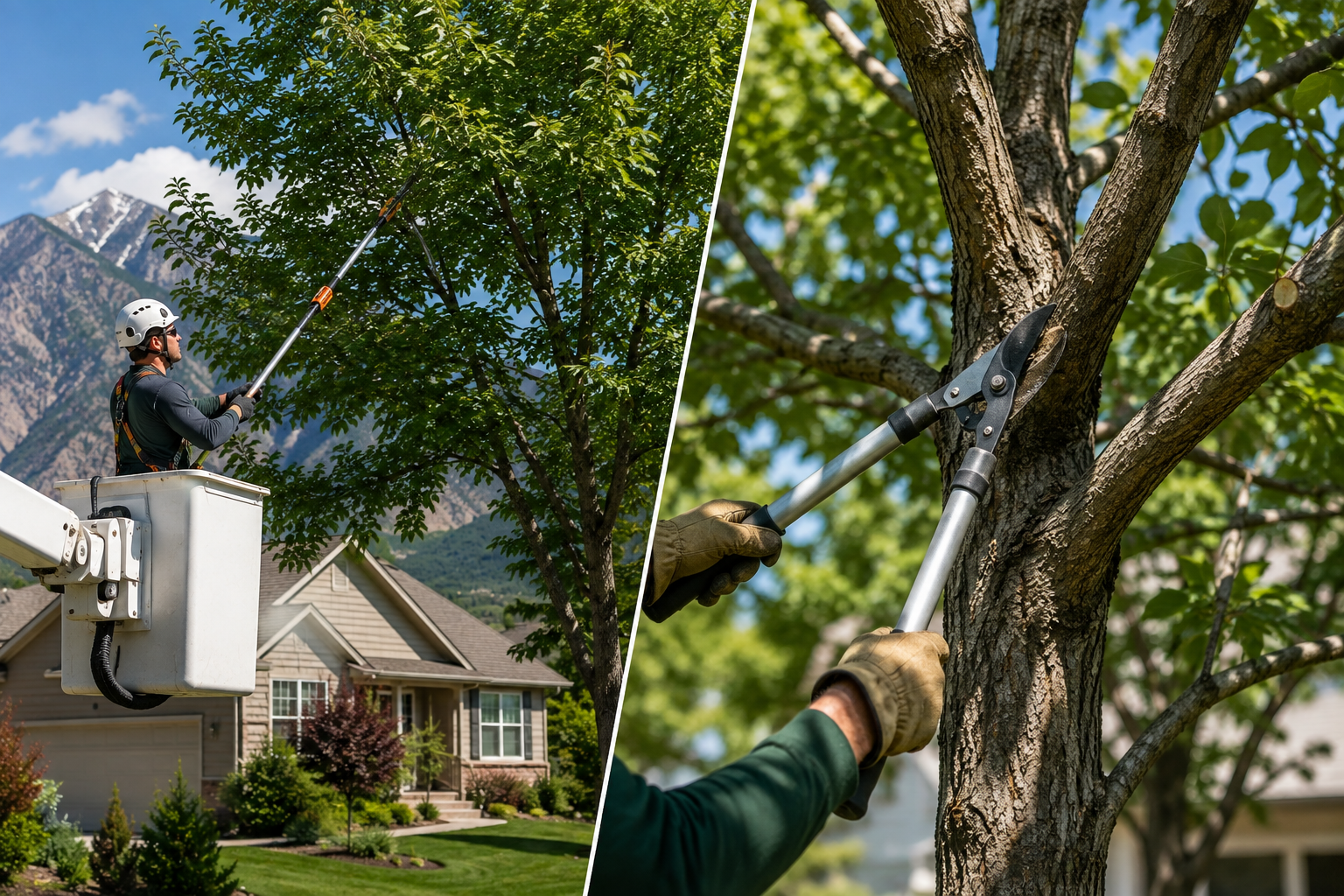
Tree trimming vs pruning is a common point of confusion for homeowners. Although the terms are often used interchangeably, they usually describe different goals in professional tree care. Tree trimming generally focuses on size, clearance, and appearance, while tree pruning focuses more on tree health, structure, and removing problematic branches.
For homeowners in Utah County, understanding the difference can make it easier to choose the right type of tree care for your property.
What Is Tree Trimming?
Tree trimming generally focuses on controlling growth, maintaining clearance, and improving the overall shape or appearance of a tree.
A tree may need trimming when branches are:
- Growing too close to a roof or building
- Blocking a driveway, sidewalk, sign, or view
- Extending into unwanted areas
- Becoming overgrown or unbalanced
- Creating clearance concerns around a property
Tree trimming can help keep branches away from homes and other structures while maintaining a cleaner, more manageable canopy.
For many residential properties in Springville, Mapleton, Spanish Fork, Provo, and other Utah County communities, trimming is an important part of routine tree maintenance.
What Is Tree Pruning?
Tree pruning is generally more focused on the health, structure, and safety of a tree.
Pruning may involve removing:
- Dead branches
- Damaged limbs
- Diseased growth
- Weak or poorly attached branches
- Crossing or rubbing limbs
- Branches that negatively affect the structure of the tree
Proper pruning can help improve branch structure, remove damaged growth, and support healthier development over time.
Tree Trimming vs Pruning: What Is the Main Difference?
The main difference between tree trimming vs pruning is the goal of the work.
Tree trimming typically focuses on managing size, clearance, and appearance. Tree pruning focuses more on improving tree health, structure, and safety.
In practice, the two services can overlap. A professional tree care visit may involve both trimming and pruning depending on the tree’s condition, location, and the needs of the property.
Is Tree Trimming Just for Appearance?
No. Tree trimming can improve appearance, but it can also address practical problems around a property.
For example, trimming may be needed when branches grow too close to a roof, driveway, sidewalk, building, or other structure.
Keeping tree growth properly managed can improve clearance and make it easier to identify damaged or problematic branches before they become larger concerns.
Why Is Proper Tree Pruning Important?
Proper tree pruning can support the long-term health and structure of a tree.
Removing dead, damaged, or poorly positioned branches may help:
- Reduce certain branch-failure risks
- Improve tree structure
- Remove damaged or unhealthy growth
- Improve clearance where needed
- Support healthier future growth
- Reduce crossing or rubbing branches
Improper pruning can damage a tree, especially when too much live growth is removed or poor cuts are made.
Large and mature trees are often best evaluated and pruned by an experienced tree care professional.
Can Pruning Help a Damaged Tree?
Sometimes.
Trees with minor storm damage, dead branches, or certain structural problems may benefit from professional pruning.
However, pruning cannot correct every problem. A tree with severe decay, major trunk damage, significant root failure, or serious structural instability may need a more detailed evaluation.
In some situations, tree removal may be safer than continued pruning.
When Should Trees Be Trimmed or Pruned in Utah?
The best time to trim or prune a tree depends on the species, condition of the tree, and reason for the work.
For many trees in Utah, late winter through early spring can be a good time for pruning because the tree is dormant and the branch structure is easier to evaluate.
However, dead, damaged, or hazardous branches may need attention at any time of year.
Utah County weather can also affect tree maintenance needs. Hot, dry summers, winter storms, wind, and changing moisture conditions can all place stress on trees and create new pruning or trimming needs.
How Often Should Trees Be Trimmed or Pruned?
There is no single pruning schedule that works for every tree.
The appropriate timing depends on factors such as:
- Tree species
- Age
- Growth rate
- Overall health
- Location
- Previous pruning
- Proximity to homes and structures
- Storm damage
- Dead or damaged branches
Some trees may benefit from professional pruning every few years, while others may need more or less frequent attention.
Understanding tree trimming vs pruning can help Utah County homeowners determine what type of maintenance their trees actually need rather than treating every tree the same way.
What Happens If a Tree Is Over-Pruned?
Removing too much live growth at one time can stress and weaken a tree.
Over-pruning can:
- Reduce the amount of leaf area available for photosynthesis
- Encourage weak new growth
- Increase stress on the tree
- Affect the natural structure of the canopy
- Create long-term maintenance problems
Proper pruning should balance the needs of the property with the health and natural structure of the tree.
What Is Tree Topping?
Tree topping is the practice of cutting large branches or the upper portion of a tree back to stubs or branches that are too small to support the tree’s normal growth pattern.
Topping can lead to decay, stress, weakly attached new growth, and structural problems.
Professional pruning techniques are generally a better option for managing tree size while preserving tree health and structure.
Does Every Tree Need the Same Type of Pruning?
No.
Different tree species grow differently and may respond differently to pruning.
The appropriate approach also depends on the age and purpose of the tree.
For example:
- Young trees may benefit from structural pruning
- Mature trees may need deadwood removal or clearance pruning
- Storm-damaged trees may require corrective pruning
- Fruit trees may need specialized pruning to manage structure and growth
A professional evaluation can help determine what type of pruning is appropriate for a specific tree.
Should I Trim or Prune My Own Trees?
Light maintenance on small, accessible branches may be manageable for some homeowners.
However, large trees, high branches, storm-damaged limbs, and trees near homes or utility lines can create serious risks.
Professional tree care is especially important when the job requires climbing, rigging, chainsaws, specialized equipment, or work around structures and power lines.
Homeowners should avoid attempting tree work that could put people or property at risk.
When Should You Call a Certified Arborist?
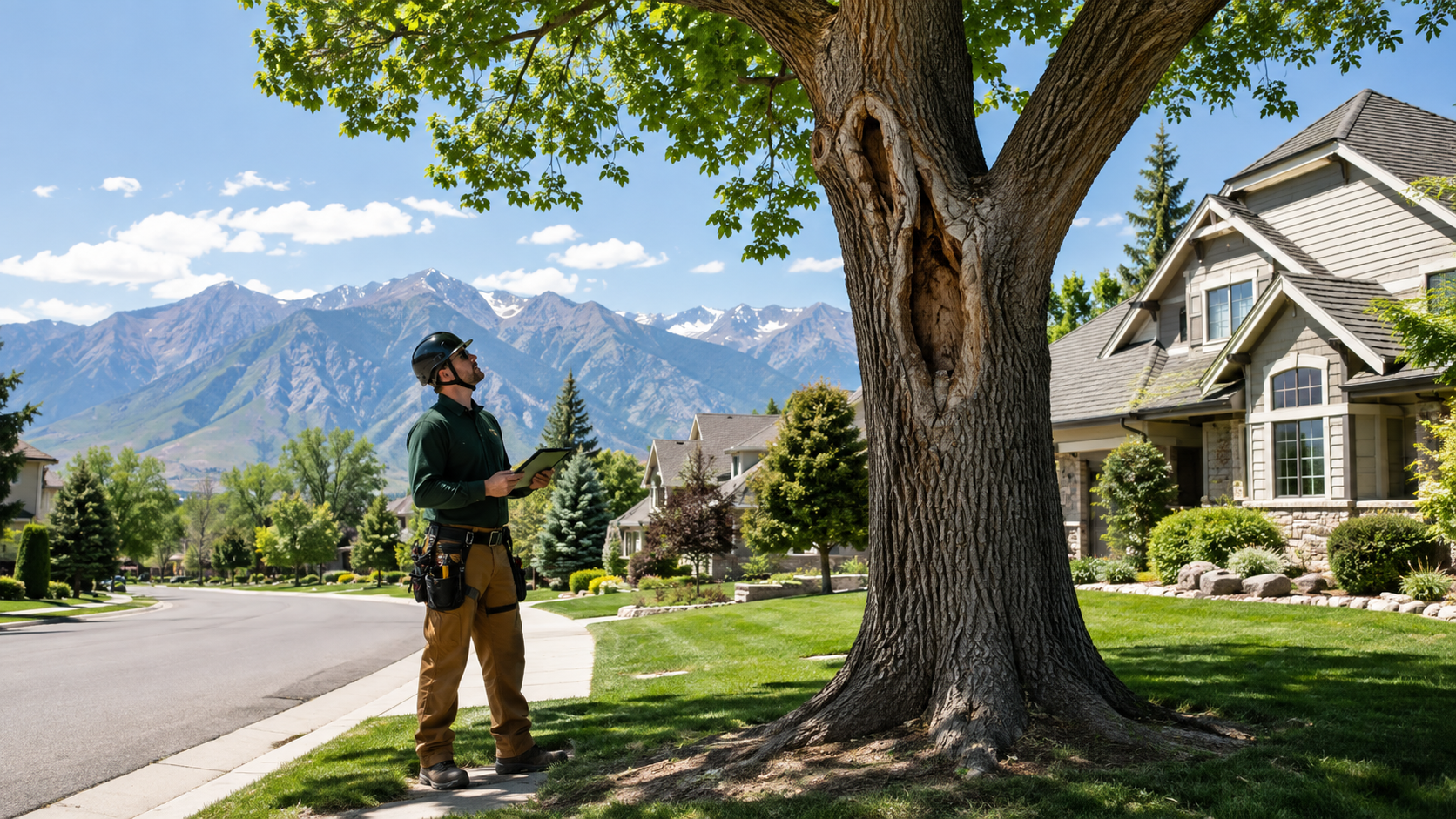
A certified arborist can help when you are unsure whether a tree needs trimming, pruning, monitoring, or removal.
An arborist can evaluate:
- Tree health
- Branch structure
- Dead or damaged limbs
- Potential hazards
- Pruning needs
- Clearance concerns
- Whether a tree can be safely preserved
This can be especially valuable for mature trees, damaged trees, or trees growing close to homes and other structures.
Professional Tree Trimming and Pruning in Utah County
Peterson Tree Care provides professional tree trimming and pruning services throughout Utah County, including Springville, Mapleton, Spanish Fork, Provo, and surrounding communities.
The right approach depends on the tree’s species, condition, structure, location, and the goals for the property.
Whether your trees need routine trimming, structural pruning, deadwood removal, or a professional evaluation, proper tree care can help maintain safer, healthier, and better-managed trees.
Need Help Deciding Between Tree Trimming and Pruning?
If you are still unsure whether your property needs tree trimming vs pruning, Peterson Tree Care can evaluate your trees and recommend the appropriate next step.
Contact Peterson Tree Care today to request a free estimate for professional tree trimming and pruning in Utah County.