Wildfire Defensible Space Requirements in Utah: A Homeowner’s Guide
Wildfire risk is an important concern for many Utah homeowners, especially those living near foothills, canyons, open land, and other areas where neighborhoods meet wild vegetation. One of the most effective ways to prepare your property is to create and maintain defensible space around your home.
Defensible space does not mean removing every tree or turning your property into bare ground. It means carefully managing trees, brush, grass, and other vegetation so a wildfire has fewer opportunities to reach your home.
For homeowners in Utah County, including Springville, Mapleton, Spanish Fork, Provo, and surrounding communities, understanding defensible space can be an important part of protecting both your property and the surrounding neighborhood.
What Is Defensible Space?
Defensible space is the area between a home and surrounding vegetation that is managed to reduce wildfire intensity and the likelihood that fire will spread to the structure.
Proper defensible space can involve:
- Removing dead trees and branches
- Clearing dry brush and vegetation
- Pruning lower tree limbs
- Increasing spacing between vegetation
- Keeping roofs and gutters clear of debris
- Moving combustible materials away from structures
- Maintaining trees and landscaping around the home
Defensible space can also give firefighters a safer area in which to work if wildfire threatens a property.
What Are Utah’s Defensible Space Requirements?
There is not one simple defensible-space rule that applies identically to every Utah property.
Requirements may depend on whether a property is within a Wildland Urban Interface, or WUI, the property’s wildfire risk, local ordinances, terrain, vegetation, and other factors.
Utah’s wildfire rules changed significantly with House Bill 48, which addresses wildfire risk in Wildland Urban Interface areas. The law includes homeowner education, property assessments, wildfire-risk classifications, defensible-space considerations, and home-hardening measures.
Because requirements can vary by location, Utah homeowners should check with their local fire authority or municipality when determining which specific standards apply to their property.
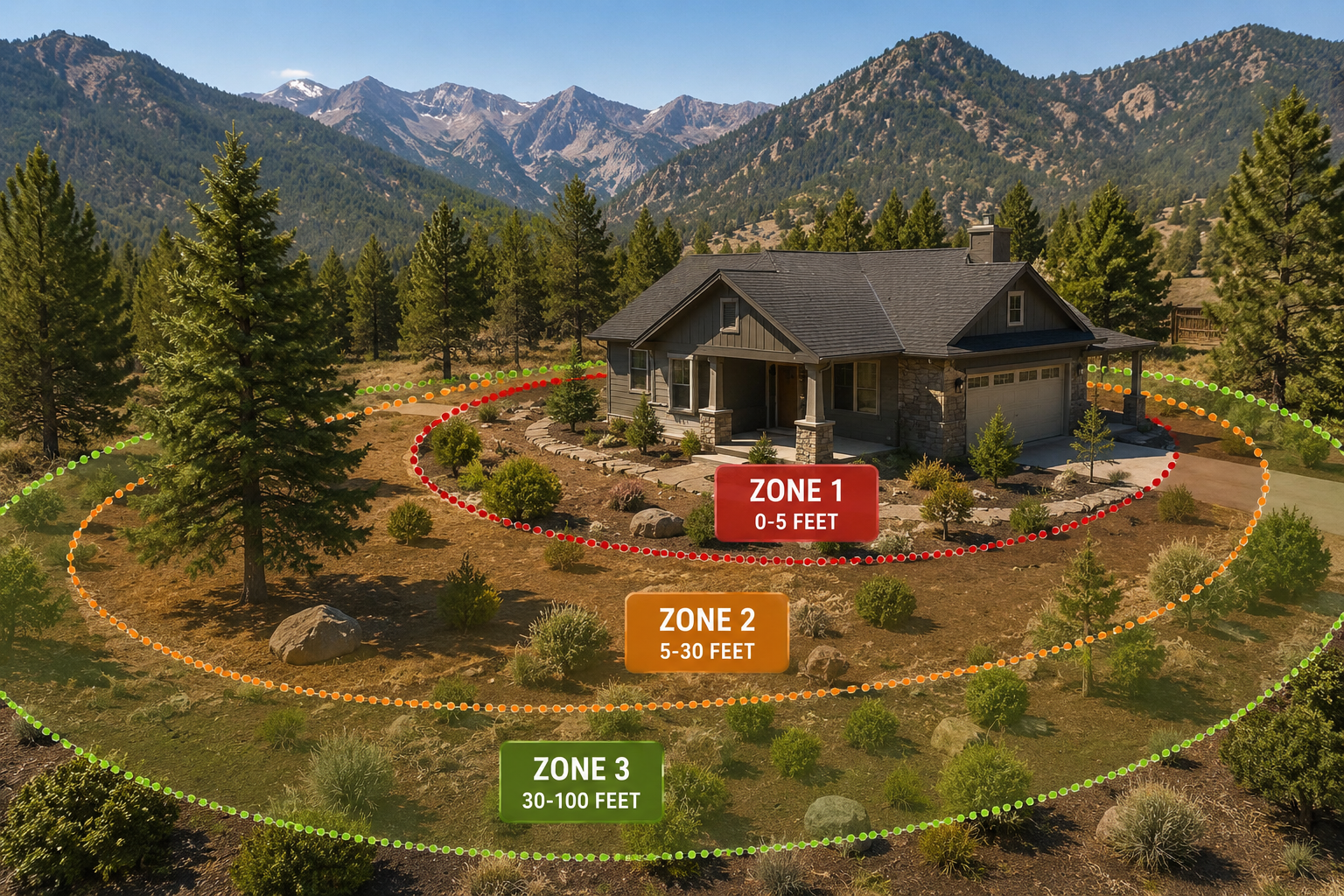
However, Utah wildfire guidance commonly organizes defensible space into three areas surrounding a home.
Zone 1: 0–5 Feet From the Home
The first five feet around the house are especially important because wind-driven embers can land next to a structure and ignite combustible materials.
This area should be kept as resistant to ignition as practical.
Homeowners should consider:
- Removing leaves, pine needles, and other dry debris
- Cleaning roofs and gutters
- Keeping firewood away from the house
- Avoiding accumulations of dry vegetation
- Managing combustible materials next to decks and structures
- Using noncombustible or ignition-resistant materials where appropriate
Even small amounts of dry material near a house can provide fuel for wind-blown embers.
Zone 2: 5–30 Feet From the Home
The next area focuses on reducing the intensity of a fire as it approaches the structure.
Homeowners should maintain landscaping, remove dead vegetation, and keep trees and shrubs from creating a continuous path for fire.
Tree care in this area may include:
- Removing dead branches
- Pruning low limbs
- Removing dead or severely declining trees
- Thinning overly dense vegetation
- Maintaining appropriate separation between trees and shrubs
- Keeping grass and other vegetation maintained
The goal is not necessarily to eliminate trees. Healthy, properly maintained trees can remain part of a fire-conscious landscape.
The key is reducing the amount and arrangement of combustible vegetation.
Zone 3: 30–100 Feet From the Home
Farther from the structure, vegetation management can help slow an approaching wildfire before it reaches the areas closest to the house.
Depending on the property, this may include:
- Removing dead trees
- Clearing accumulated brush
- Thinning dense groups of trees
- Removing deadwood
- Reducing ladder fuels
- Maintaining grasses and weeds
- Creating greater separation between vegetation
Properties on steep slopes or surrounded by dense vegetation may require additional considerations beyond these general distances.
What Are Ladder Fuels?
Ladder fuels are plants, branches, shrubs, or other vegetation that allow fire to move from the ground into the canopy of a tree.
For example, dry grass may ignite a shrub, which then spreads flames into low tree branches. Once fire reaches the tree canopy, it can become much more difficult to control.
Reducing ladder fuels may involve pruning lower branches, removing deadwood, thinning shrubs beneath trees, and creating separation between layers of vegetation.
Professional tree pruning can play an important role in this process.
Do Dead Trees Need to Be Removed for Fire Mitigation?
Dead trees can contribute additional combustible material to a property and should be evaluated as part of a wildfire mitigation plan.
The appropriate response depends on the tree’s condition, location, surrounding vegetation, and the risks involved in removing it.
In some cases, removing a dead or severely declining tree may:
- Reduce available wildfire fuel
- Eliminate dead branches that can fall
- Create greater spacing between vegetation
- Reduce hazards near homes and other structures
Large, unstable, or difficult-to-access trees should be evaluated and removed by experienced tree care professionals rather than handled as a DIY project.
Does Defensible Space Mean Cutting Down All Your Trees?
No.
Effective wildfire mitigation is about strategic vegetation management, not automatically removing every tree around a home.
Healthy trees may be retained when they have appropriate spacing, are properly pruned, and do not create an unacceptable pathway for fire to reach a structure.
In many cases, professional pruning, deadwood removal, brush clearing, and selective tree removal can improve defensible space while preserving valuable trees on the property.
How Does Utah County’s Environment Affect Wildfire Risk?
Utah County includes a wide range of landscapes, from established neighborhoods to properties near foothills, canyons, open fields, and undeveloped vegetation.
Communities such as Springville, Mapleton, Spanish Fork, Provo, and other parts of Utah County can contain properties where homes and wild vegetation are relatively close together.
Utah’s hot, dry summers can also dry grasses, brush, branches, and other vegetation that may become wildfire fuel.
That makes regular property maintenance particularly important before and during fire season.
When Should You Create Defensible Space?
Wildfire mitigation should ideally happen before wildfire season and before an emergency develops.
Homeowners can routinely:
- Remove dead branches and vegetation
- Keep grasses and weeds maintained
- Clear leaves and debris
- Inspect trees for declining or dead limbs
- Evaluate dense vegetation near structures
- Address dead or hazardous trees
- Maintain previously created defensible space
Defensible space is not a one-time project. Trees grow, vegetation returns, storms create new deadwood, and conditions around a property change.
Regular maintenance helps preserve the work that has already been done.
Can Peterson Tree Care Help With Defensible Space?
Yes. Peterson Tree Care provides wildfire mitigation and defensible space services for Utah property owners.
Depending on the property, wildfire mitigation work may include professional tree pruning, deadwood removal, removal of dead or hazardous trees, brush and vegetation clearing, and other tree care work intended to reduce fuels around the property.
Every property is different, so the best approach depends on the trees, vegetation, terrain, structures, and surrounding conditions.
Prepare Your Utah Property Before Fire Season
Creating defensible space cannot eliminate wildfire risk, but thoughtful tree and vegetation management can reduce hazards around a home and make a property better prepared.
If you have dead trees, overgrown vegetation, low branches, dense tree growth, or other concerns around your Utah County property, Peterson Tree Care can help evaluate the tree work involved in improving your defensible space.
Contact Peterson Tree Care today to request a free estimate for wildfire mitigation, tree pruning, tree removal, or other professional tree care services.