Do I Need a Permit to Remove a Tree in Utah?
If you are planning to remove a tree from your property, you may be wondering whether you need a tree removal permit in Utah first.
Utah does not have one universal tree removal permit requirement that applies to every residential property. Whether you need approval depends on where the tree is located, who owns the land, and the rules established by your city, county, homeowners association, or other governing authority.
For homeowners in Utah County, checking these requirements before scheduling tree removal can help prevent delays and unexpected problems.
When Is a Tree Removal Permit in Utah Required?
Whether a tree removal permit in Utah is required often depends on the location and ownership of the tree.
A tree located entirely on private residential property may not require the same approval as a tree located in a park strip, public right-of-way, easement, development area, or other regulated location.
Additional rules may apply if the tree is:
- Located in a park strip or public right-of-way
- Located on city, county, state, or other public property
- Protected by a local tree ordinance
- Part of an approved development or landscaping plan
- Located near utilities
- Subject to homeowners association requirements
- Located in another protected or regulated area
Because requirements can vary by city and property, homeowners should verify local rules before removing a tree.
Do You Need a Permit to Remove a Tree on Private Property?
In many situations, a homeowner may be able to remove a tree located entirely on private property without obtaining a city tree permit.
However, this should not be assumed in every situation.
Local ordinances, HOA rules, development requirements, easements, and other restrictions can affect whether approval is needed.
If you are unsure whether you need a tree removal permit in Utah, contacting your city before scheduling the work is a good first step.
What About Trees in a Park Strip or Public Right-of-Way?
This is one of the most important distinctions for Utah homeowners.
A tree may look like it is part of your front yard while actually being located within a public park strip, easement, or right-of-way.
Cities may regulate these trees because they can affect sidewalks, roads, utilities, visibility, and public landscaping.
For example, Springville City regulates tree removal and other work involving trees in public rights-of-way and park strips. Property owners should confirm city requirements before trimming or removing one of these trees.
This is why it is important to determine whether a tree is actually located entirely on private property before scheduling removal.
Do I Need Permission to Remove a Street Tree in Springville?
Springville City regulates trees located in public streets, park strips, city-owned property, and public rights-of-way.
Property owners may need approval before removing or significantly altering trees in these areas.
If you live in Springville and have a tree near the street or sidewalk, check with the city before beginning tree removal.
Homeowners can also review current Springville City requirements directly through the city’s municipal code or contact the appropriate city department for guidance.
What About Tree Removal Rules in Other Utah County Cities?
Tree removal requirements can vary throughout Utah County.
Homeowners in communities such as Springville, Mapleton, Spanish Fork, Provo, Orem, and surrounding areas should verify local rules when a tree is located near:
- A street
- A sidewalk
- A park strip
- A utility easement
- A public right-of-way
- Municipal property
Even if a typical backyard tree does not require a permit, trees near public property may be treated differently.
If you are unsure, contact your local planning, public works, parks, or urban forestry department before removing the tree.
Are There Special Rules for Trees on Public Property?
Yes. Trees on public property should not be treated the same as privately owned residential trees.
Utah law includes protections for certain trees on public property, and cities may have additional rules governing street trees, park trees, or trees located within public rights-of-way.
If a tree is located on city, county, state, or federal property, do not remove it without confirming who owns the tree and whether authorization is required.
What If the Tree Is Dead or Dangerous?
A dead, severely damaged, or structurally unstable tree may need attention quickly, but an emergency does not automatically eliminate every local requirement.
A dangerous tree may have:
- Large dead branches
- Severe trunk cracks
- Significant decay
- Major storm damage
- Root failure
- A sudden or unusual lean
- Structural damage near a home, road, or other high-use area
If the tree is located near a roadway, public right-of-way, utility line, or other regulated area, confirm which agency or property owner has authority over it.
For an immediate emergency involving power lines or another serious hazard, stay away from the area and contact the appropriate utility or emergency service.
Do I Need a Permit to Remove a Tree Near Power Lines?
Permit requirements and utility safety are separate issues.
Even when a tree is on private property, removing or pruning a tree near energized power lines can be extremely dangerous.
Homeowners should not attempt this type of work themselves.
Depending on the location of the tree and the utility lines, the utility provider or qualified line-clearance professionals may need to become involved.
Before scheduling tree removal near power lines, determine who is responsible for the lines and what safety requirements apply.
What If the Tree Is Part of a Construction or Development Project?
Tree removal rules can be different when trees are being removed as part of new construction, commercial development, subdivision work, or another land-use project.
Local governments may require:
- Tree preservation plans
- Landscaping plans
- Replacement trees
- Development approval
- Additional site review
If tree removal is connected to a larger development project, review the approved plans and applicable city requirements before work begins.
Can an HOA Restrict Tree Removal?
Yes.
A city may not require a permit for a particular tree, but a homeowners association may still have its own rules.
HOA requirements may address:
- Mature tree removal
- Front-yard landscaping
- Replacement trees
- Common-area trees
- Approved tree species
- Visible changes to landscaping
Homeowners should review their HOA documents or contact the association before removing a significant tree.
What Should I Check Before Removing a Tree?
Before scheduling tree removal, ask:
- Is the tree entirely on my private property?
- Is it located in a park strip or public right-of-way?
- Does my city require approval?
- Does my HOA have tree removal rules?
- Is the tree near a utility easement or power line?
- Is it located on public property?
- Is the tree part of a development or landscaping plan?
- Is the tree hazardous enough to require immediate professional attention?
Confirming these details beforehand can help prevent delays and make the tree removal process smoother.
Should I Have the Tree Evaluated Before Removing It?
In many cases, yes.
A tree that appears unhealthy or dangerous does not always need to be removed.
Professional pruning, deadwood removal, structural pruning, or other tree care may sometimes allow a tree to remain safely on the property.
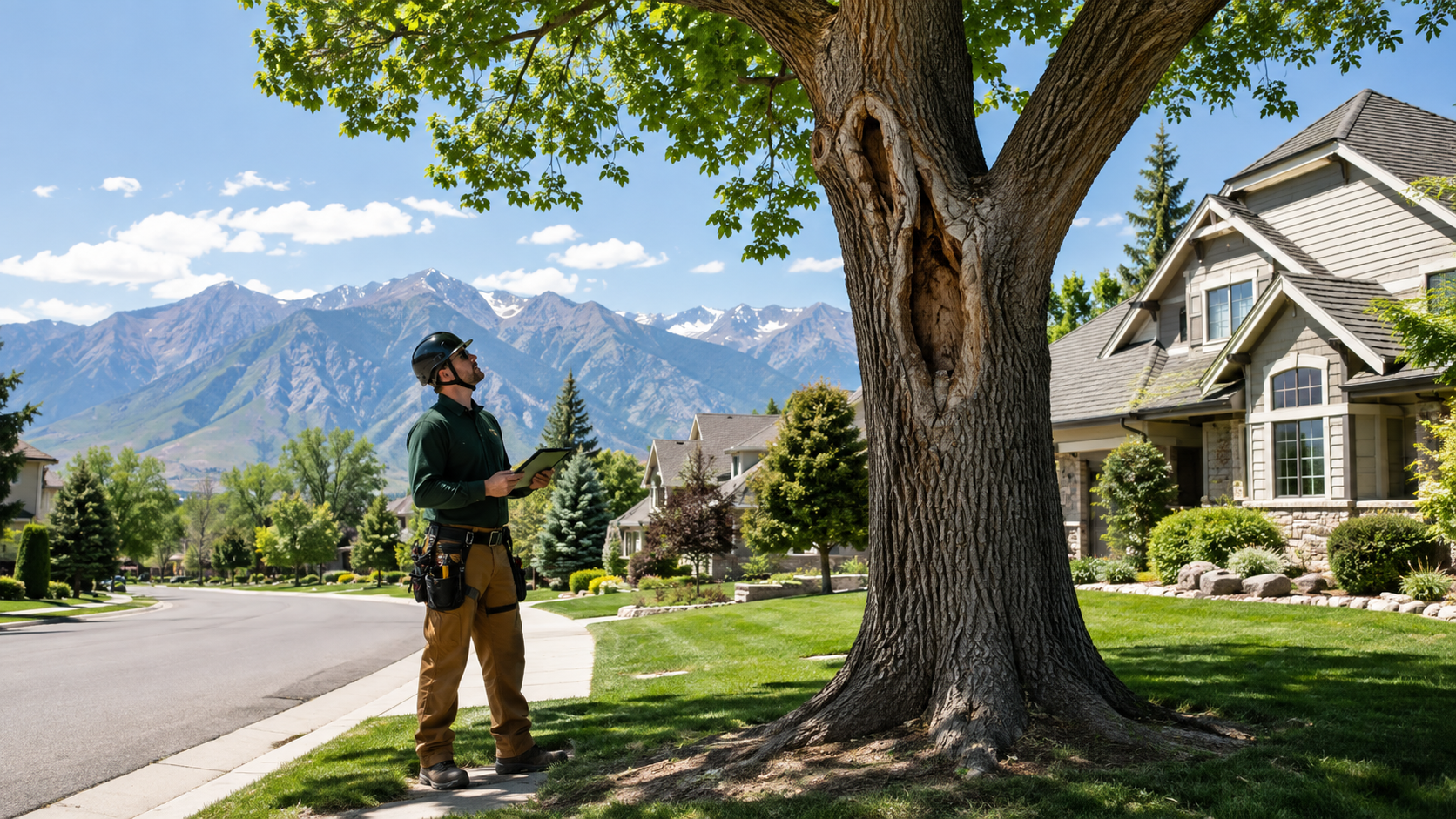
A certified arborist can evaluate the tree’s condition, structure, location, and potential risk and help determine whether removal is the appropriate next step.
This can be especially valuable for large trees, mature trees, trees near homes, and trees located close to public property.
Professional Tree Removal in Utah County
Peterson Tree Care provides professional tree removal and tree care services throughout Utah County, including Springville, Mapleton, Spanish Fork, Provo, and surrounding communities.
Peterson Tree Care can evaluate dead, damaged, hazardous, or unwanted trees and help property owners understand the tree work involved before removal begins.
For trees located in park strips, public rights-of-way, near utilities, or other regulated areas, property owners should still verify any applicable city, utility, HOA, or agency requirements before work begins.
Need Help With a Tree on Your Utah County Property?
If you are unsure whether a tree should be removed, Peterson Tree Care can evaluate its condition and discuss the safest next step.
Before removing a regulated or publicly owned tree, confirm whether a tree removal permit in Utah or another form of approval applies to the property.
Contact Peterson Tree Care today to request a free estimate for professional tree removal in Utah County.