The Benefits of Professional Tree Management for Businesses
The Benefits of Professional Tree Management for Businesses
Trees can add shade, appearance, and long-term value to commercial properties, but they also require planning. Professional tree management helps businesses identify maintenance needs, address developing risks, preserve healthy trees when possible, and coordinate tree work around the needs of the property.
For commercial property owners and managers in Utah County, tree care is not only about appearance. It can also affect access, parking areas, sidewalks, buildings, signage, customer areas, and the overall condition of the property.
What Is Professional Tree Management?
Professional tree management means evaluating and maintaining trees based on their condition, location, structure, and relationship to the property around them.
Depending on the site, that may include:
- Tree health consultations
- Professional pruning
- Deadwood removal
- Clearance pruning
- High-risk trimming and removal
- Tree removal when necessary
- Storm response
- Stump grinding
- Planning around construction or property changes
- Monitoring trees with known concerns
Not every commercial property needs every service. The purpose of management is to identify the work that matters most and avoid unnecessary work.
Professional Pruning Can Help Maintain Clearance
Commercial properties often have trees near parking lots, sidewalks, buildings, signs, roads, lighting, and service areas.
As trees grow, branches may begin to interfere with those spaces. Targeted pruning can help maintain appropriate clearance while preserving healthy canopy where possible.
This can be especially important for properties with regular vehicle traffic, pedestrian areas, delivery access, or visibility concerns.
Tree Management Can Help Address Developing Risks
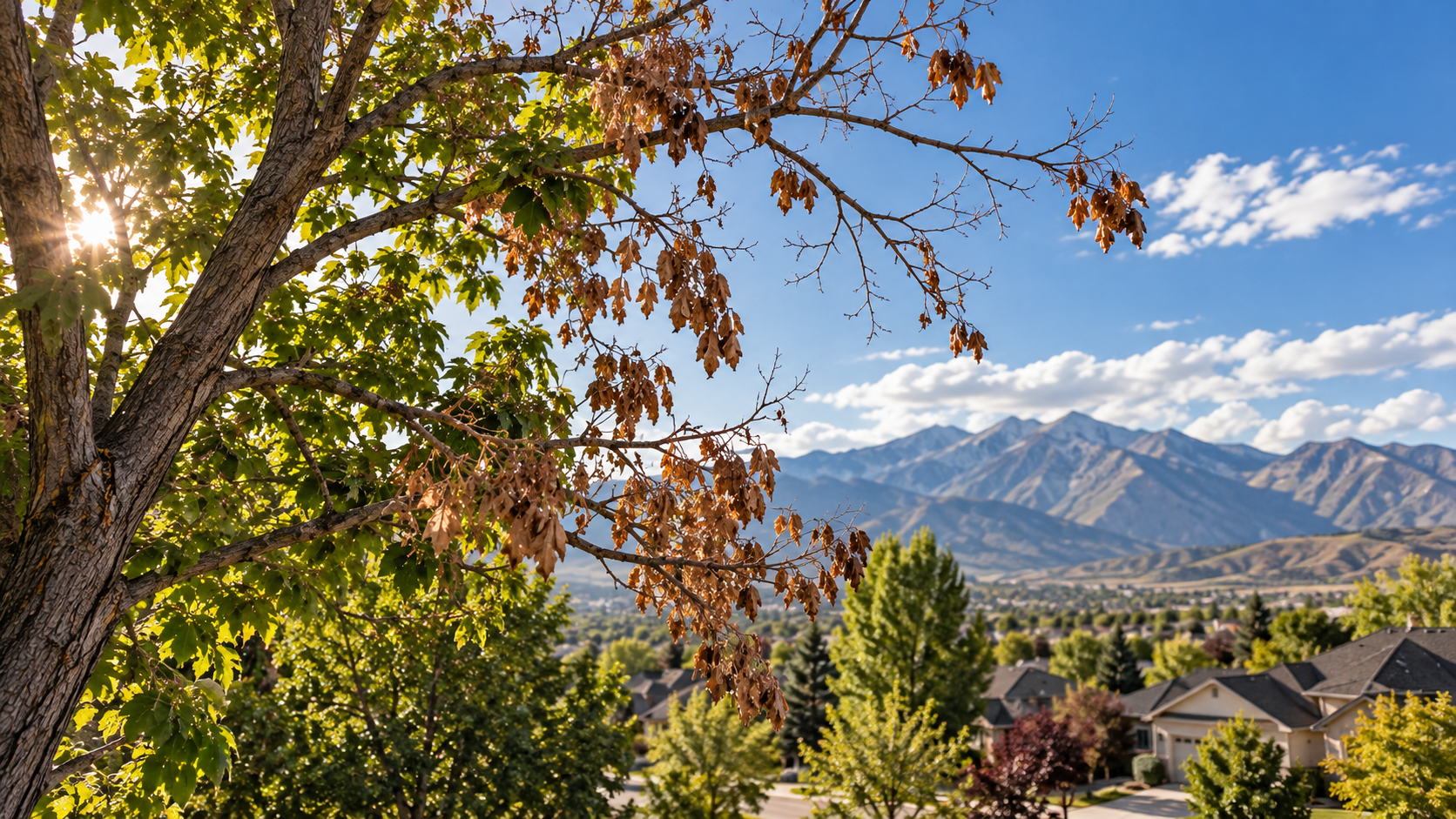
Commercial trees can develop dead branches, cracks, decay, weak attachments, root damage, or storm-related defects over time.
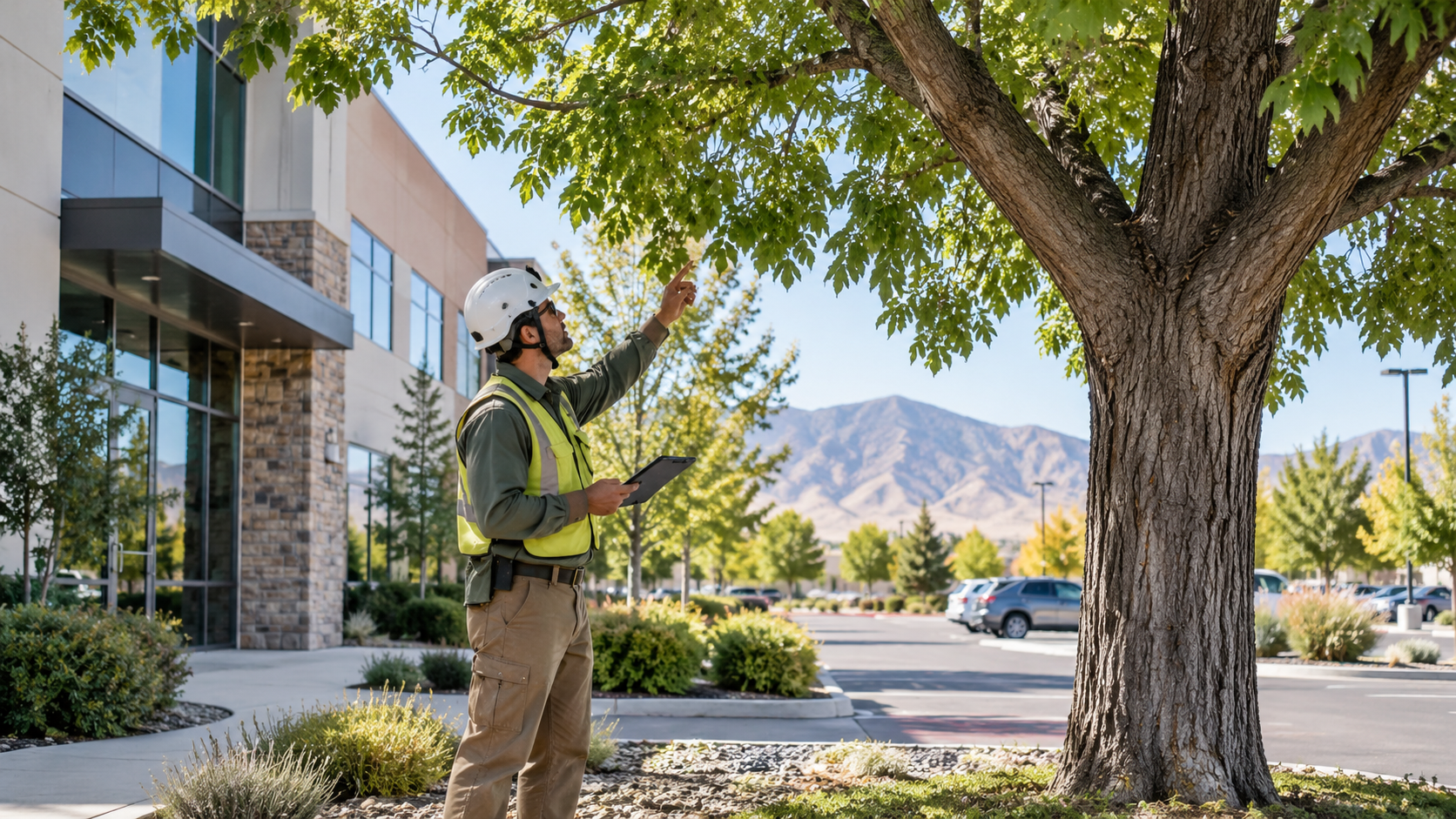
Regular observation and professional evaluation can help identify meaningful changes before they are ignored for years.
This does not mean every defect requires removal. Depending on the condition, an appropriate response may be pruning, monitoring, changing use around the tree, or removal when the issue cannot reasonably be reduced another way.
Peterson Tree Care’s guide on commercial tree liability risks explains several concerns property owners and managers should watch for.
Healthy Trees Can Support the Appearance of a Property
Well-maintained trees can contribute to a cleaner, more established appearance around commercial properties.
Professional pruning may help maintain shape, remove dead growth, and manage branches that interfere with buildings, walkways, or other site features.
The goal should not be to over-prune for appearance. Good tree care balances aesthetics with structure and long-term tree health.
Tree Care Can Be Coordinated Around Property Operations
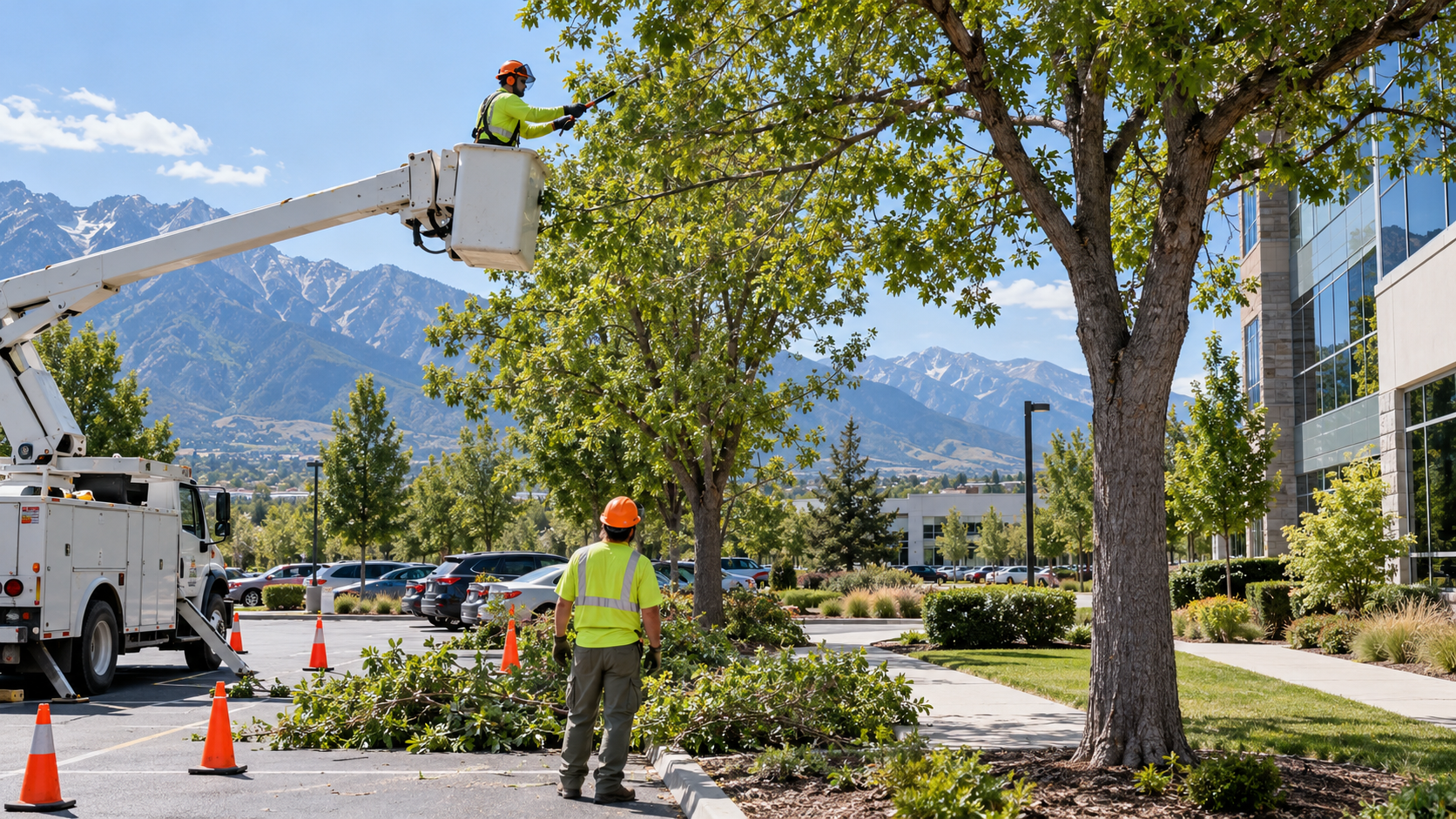
Commercial tree work often requires more planning than residential work because the property may remain active during service.
Work may need to account for:
- Parking and vehicle traffic
- Pedestrian access
- Business hours
- Tenants or customers
- Loading or service areas
- Nearby buildings
- Utility lines
- Other contractors working on site
Professional planning can help reduce disruption while keeping the work area organized and appropriate for the site.
Storm Preparation and Response Matter for Businesses
Strong wind, snow, and severe weather can change tree conditions quickly. Broken limbs, hanging branches, or uprooted trees can interfere with access and create urgent concerns around commercial properties.
A proactive tree-care approach can help identify deadwood, weak branches, and structural concerns before severe weather, although no maintenance plan can eliminate all storm damage.
Peterson Tree Care provides 24-hour emergency and storm-related tree work and high-risk trimming and removal.
Construction and Property Improvements Can Affect Trees
Commercial properties frequently change over time. New pavement, utilities, buildings, signs, landscaping, grading, or trenching can affect roots and soil conditions.
Root damage may not produce obvious canopy symptoms immediately. A mature tree can decline gradually after construction or soil disturbance.
Including tree considerations early in a property-improvement project can help owners understand where conflicts may exist and what options are available.
Professional Tree Management Can Help Preserve Valuable Trees
Removal is sometimes necessary, but it is not the goal of every tree-care decision.
When a tree is healthy enough to retain, appropriate pruning, monitoring, and site management may help preserve it. Mature trees can take many years to replace, so preservation can be valuable when it is reasonable for the property.
A professional evaluation can help separate manageable concerns from conditions that are more serious.
When Tree Removal Is the Better Option
Some trees are not reasonable candidates for continued retention. Removal may be appropriate when a tree is dead, severely decayed, structurally compromised, badly damaged, or located where the concern cannot reasonably be reduced.
The decision should consider the individual tree and the property around it.
For an overview of what removal involves, see The Tree Removal Process: What Homeowners Can Expect. The same core planning principles can apply to many commercial removals, although access and site conditions may be different.
Why a Consistent Tree-Care Strategy Helps
Commercial tree care is often more effective when decisions are based on current conditions and priorities rather than waiting for a major problem.
A practical management approach may involve periodic evaluation, targeted pruning, attention to storm damage, and prioritization of higher-risk or higher-impact trees.
Peterson Tree Care’s website confirms HOA/tree service plans. Recurring commercial maintenance plans beyond that should be discussed directly with the company rather than assumed.
Professional Tree Services for Utah County Businesses
Peterson Tree Care serves commercial, residential, and municipal properties and provides professional pruning, tree removal, stump grinding, tree health consultations, high-risk trimming and removal, crane services, line-clearance services, and emergency/storm work.
You can review the current tree care services for more information.
Need Help Managing Trees on a Commercial Property?
If your property has overgrown branches, deadwood, storm damage, declining trees, clearance issues, or trees that need professional evaluation, Peterson Tree Care can help assess the situation and discuss appropriate next steps.
Contact Peterson Tree Care to request a free estimate for commercial tree care in Utah County.
Frequently Asked Questions
How Often Should Commercial Trees Be Evaluated?
There is no universal schedule for every commercial property. Tree age, condition, site use, storm exposure, construction activity, and nearby people or property all affect how often a tree should be reviewed.
Does Every Commercial Tree Need Regular Pruning?
No. Pruning should be based on a clear reason, such as deadwood, structure, clearance, storm damage, or another specific maintenance need. Healthy trees should not be pruned simply to create activity.
Can Professional Tree Management Reduce Liability?
Professional tree care can help property owners identify and address visible concerns, but it cannot eliminate all risk or guarantee that a tree or branch will never fail. The goal is to make informed maintenance decisions based on current conditions.